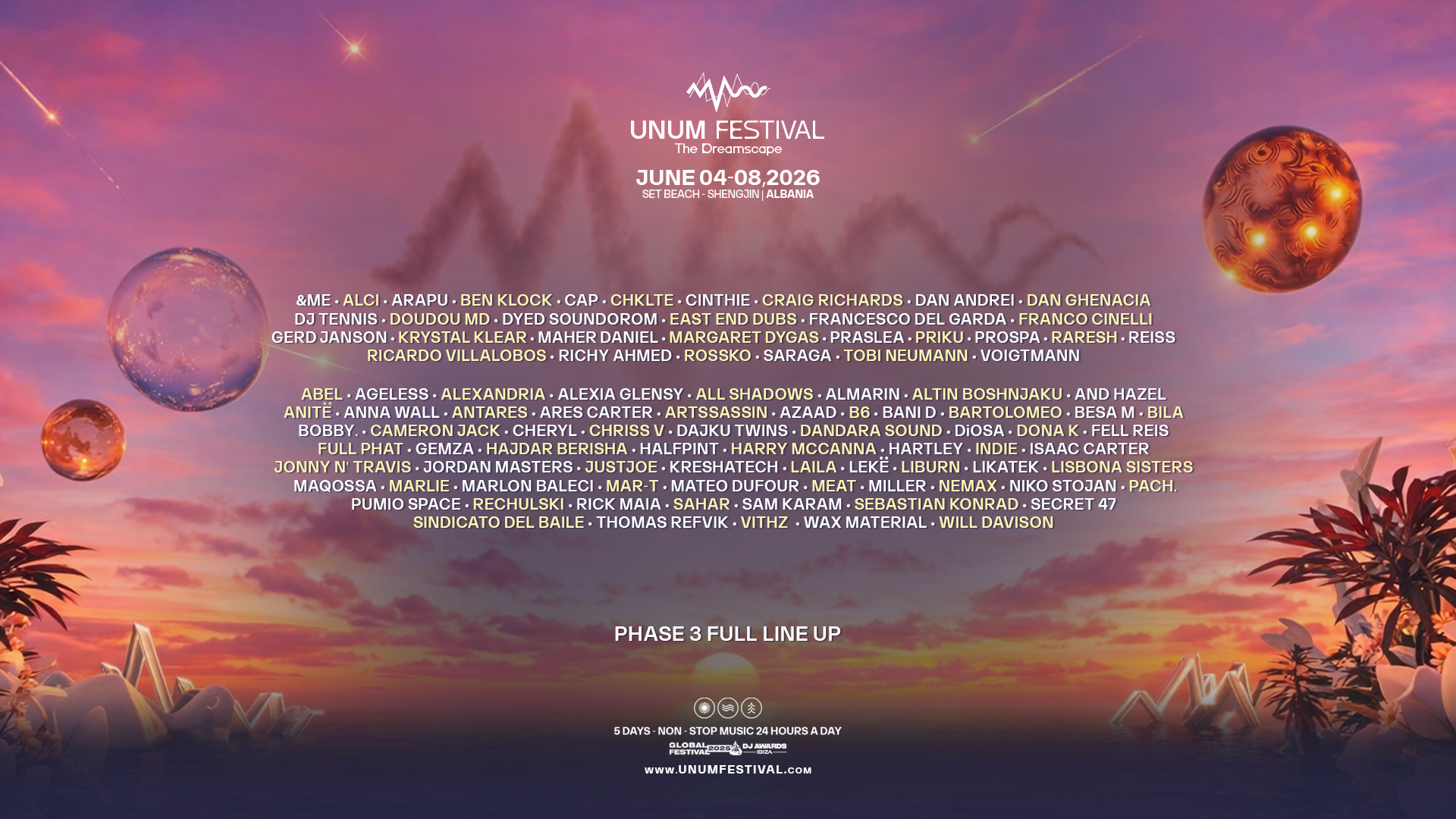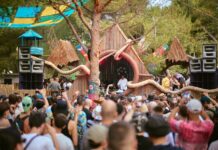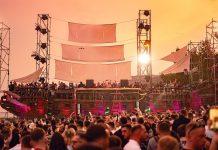
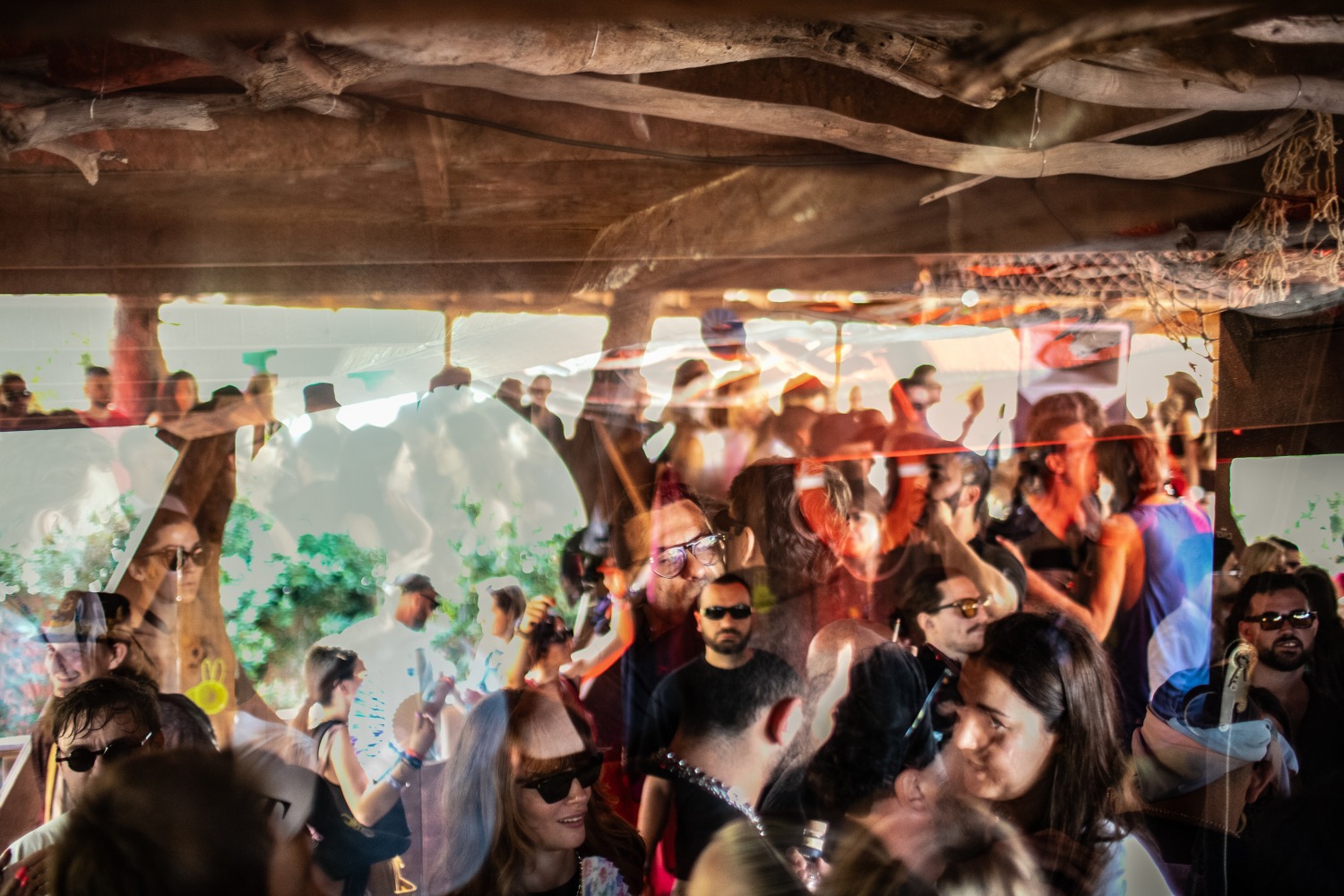
There is a moment, somewhere on the Adriatic coast in northern Albania, when the festival starts to make sense. It is not the lineup announcement or the ticket confirmation. It is the moment the music doesn’t stop.
UNUM runs for five days. Continuously. Twenty-four hours a day, across multiple stages carved from land that looks like it has always been this way. “Things get fished out of the sea and put to use on site,” as one of the festival’s partners puts it — a detail that tells you almost everything about the ethos. The infrastructure is honest about itself. And in a European festival landscape increasingly defined by corporate scaffolding and algorithmic lineups, that honesty is rarer than it should be.
It is, they say, “stripped back in a way that’s almost impossible to find anywhere else in Europe — with an energy closer to what you’d experience at a South American festival, and it’s just a short flight away for most Europeans.” Now in its seventh year, UNUM has arrived — though “arrived” is perhaps the wrong word for something that was always, fundamentally, of this place.
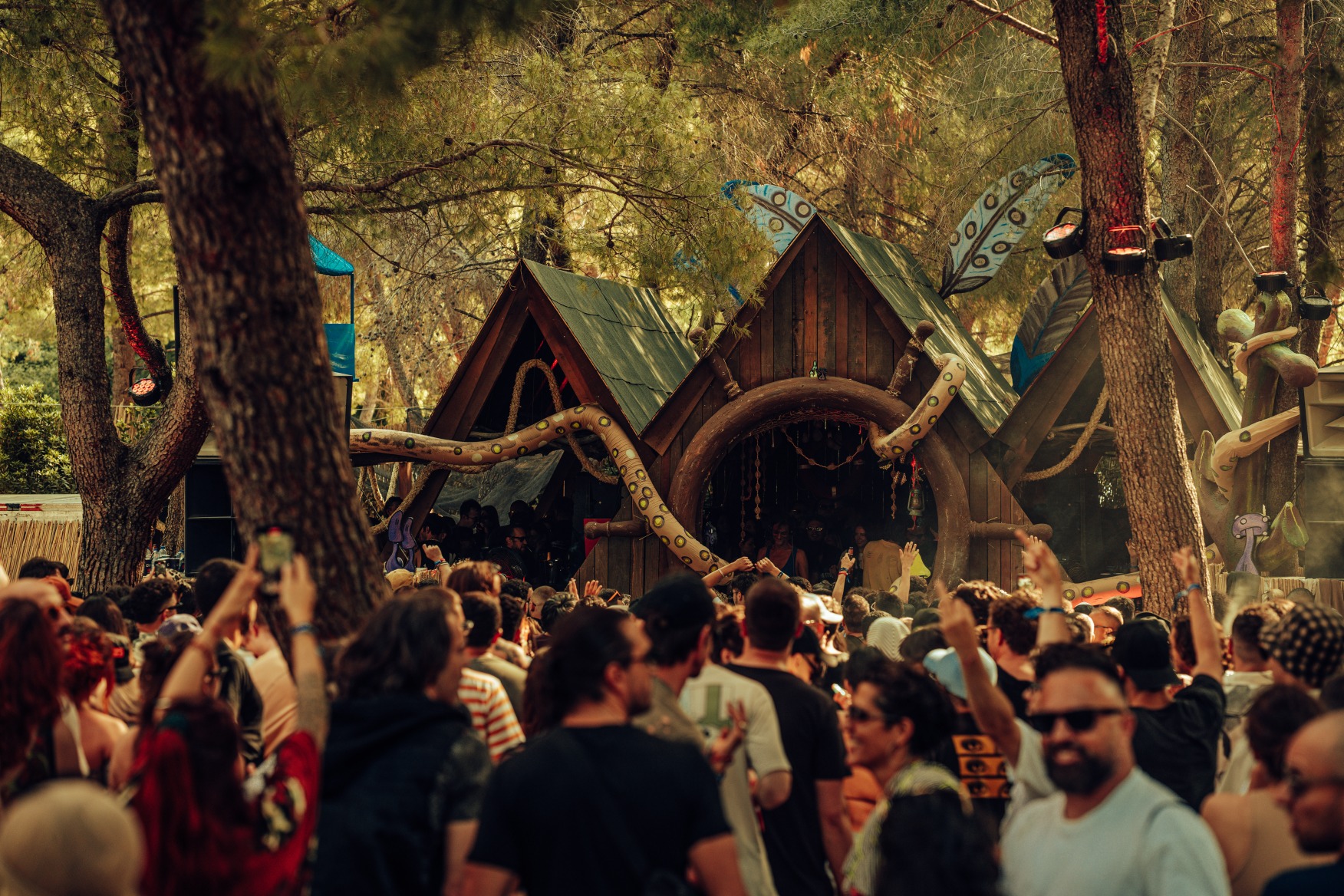
UNUM was founded by Qukla and Buti, two people who had travelled far enough to understand what they were missing when they came home. Kosovo is a landlocked country, and the trips they took — to the best festivals in the world, the immersive, eye-opening kind that leave a mark — did exactly what travel is supposed to do. They shifted something.
The question was what to do with that shift. The answer was right across the border. A short journey into northern Albania, and suddenly the vision was obvious: Shëngjin, on the Adriatic, with its particular quality of light and its particular quality of quiet. “Why travel somewhere else? Somewhere that doesn’t have the views, the beauty, the local support, when you can do it in your own backyard?”
Albania was not on most people’s festival map when UNUM first took shape. That was never really the point. The founders are Albanian and Kosovan, and they are fiercely proud of their country. This was always a local festival, built by Balkan people, for reasons that had nothing to do with market positioning and everything to do with wanting to bring the very best of what they’d experienced back to somewhere that felt like home.
The international reputation came later. It always does, for the ones that earn it.
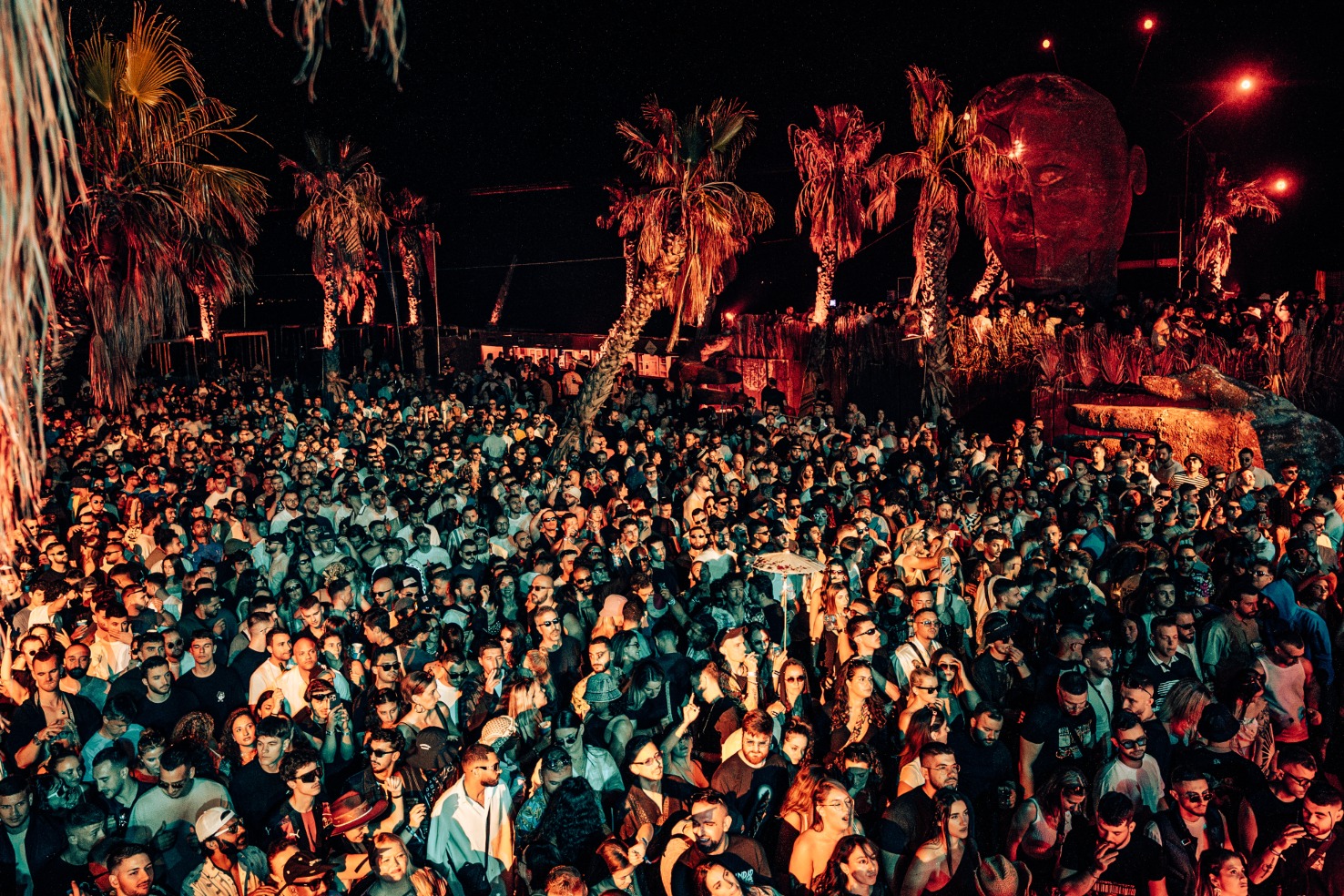
There is a common misconception about UNUM worth addressing directly. When people talk about what they call “international” festivals — Love International, Dimensions, others — they are describing international promoters operating in a foreign country. “UNUM is different. It’s a local festival, built by Balkan people.” It was built here, from here, by people who have a stake in what Albania becomes.
It is only in the last couple of years that the festival has really landed on the European and international radar. But that landing is the result of seven years of hard work. “The international reputation came later. The local foundation was always there from day one.”
The site itself moved a couple of times in the early years, never more than a kilometre or two in each direction, the team learning as they built. There is a phrase that runs through everything UNUM does: “if it doesn’t work, figure out a way to make it work.” The spirit has never really left. The feeling now is that they have found the right home.
Artist hospitality has always been a foundation, even when budgets were tight. Artists are encouraged to stay for two or three days rather than fly in, play, and disappear. The logic is simple: “There’s no better advertisement than someone who’s actually been there telling others what it felt like.” Word of mouth has always been UNUM’s most powerful tool.
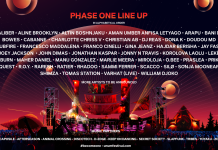
The programming is handled by Grego and Kresha, who have developed a genuine vision for what the lineup should be. Bigger and more established artists arrive each year. But what has remained central is the space it holds for local and emerging talent. “One of the genuinely magical things about UNUM is stumbling across an artist you’ve never heard of and having your world completely opened up.”
None of this has been easy to sustain. UNUM is entirely independent — relying on ticket sales and whatever sponsorship it can bring in. “The pressure isn’t resisting the temptation to scale up; it’s finding ways to keep it going at all.” What has never been compromised is the people: the ones who build it, and the ones who have supported it across seven years.
The relationship with both the national government and the local authorities in Lezhë has always been positive and genuinely supportive. They understand what the festival brings to the region, to the country, to the international conversation about what Albania is becoming. The prime minister has spoken publicly about the power of tourism as a driver of national growth, and UNUM fits directly into that vision.
What has been particularly valuable is the openness of the communication. “They’ve always asked how they can help, what the festival needs, what obstacles they can remove” — whether that concerns wiring, infrastructure, or access. There has been a genuine willingness to work together.
Local impact is not an abstraction here. The town of Lezhë has seen genuine development through the new visitors each edition brings. The production itself is built around local teams — Albanians construct the site, the wider crew comes from across the Balkans, and Cătălin from Sunwaves brings his Romanian team over. “It is, in the truest sense, a family affair.”
The milestone most often cited is a quiet one: UNUM was the first festival to return after COVID — the first, internationally. That was before the current team joined in its present form, but it is what put the festival on the wider map. Qukla, Buti, Kresha, and Grego pushed hard for it, and it was a real turning point.
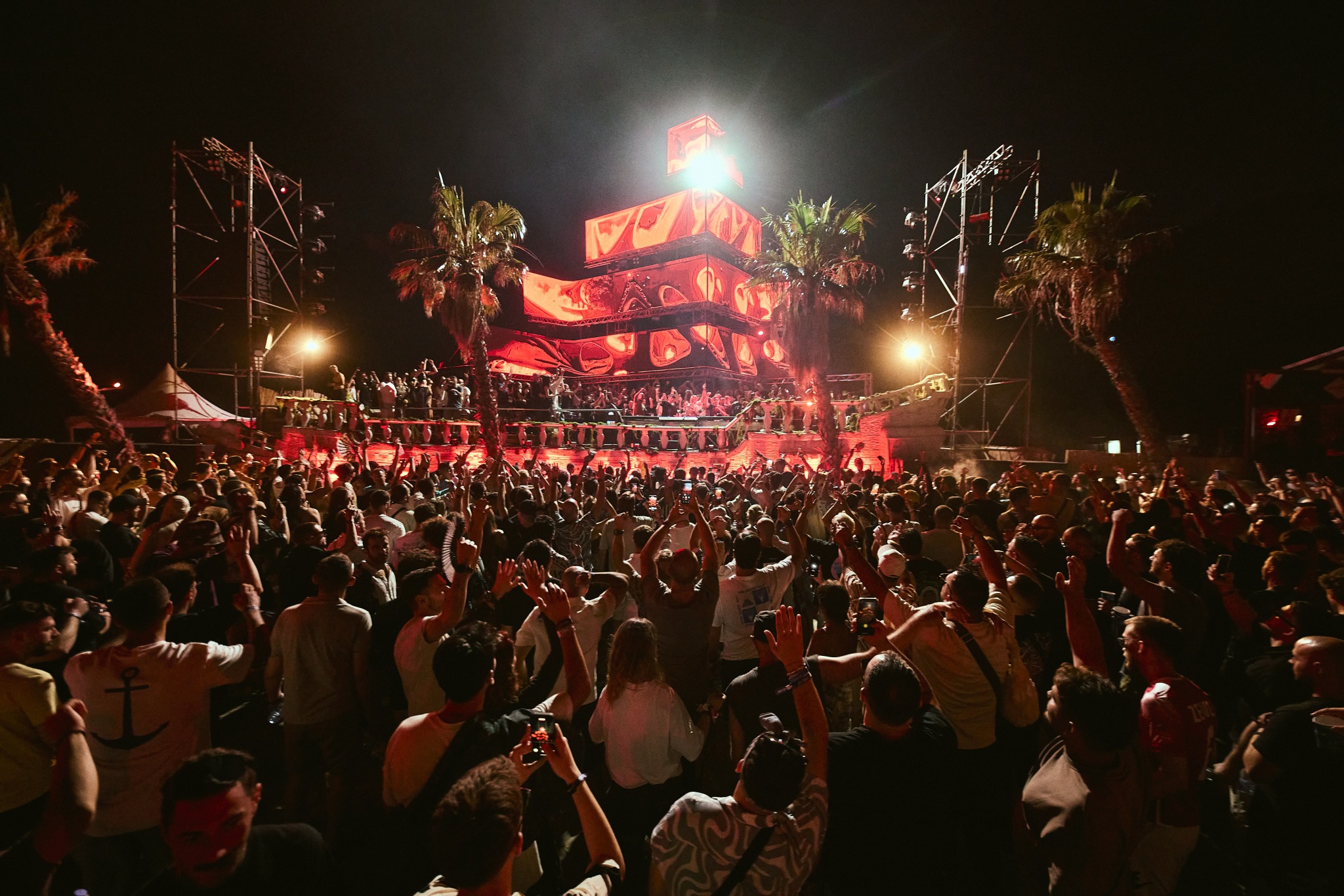
More recently, the DJ Awards for Best Global Festival brought meaningful external validation. For the newer partners who had just come on board, receiving that kind of international recognition in their very first year meant everything.
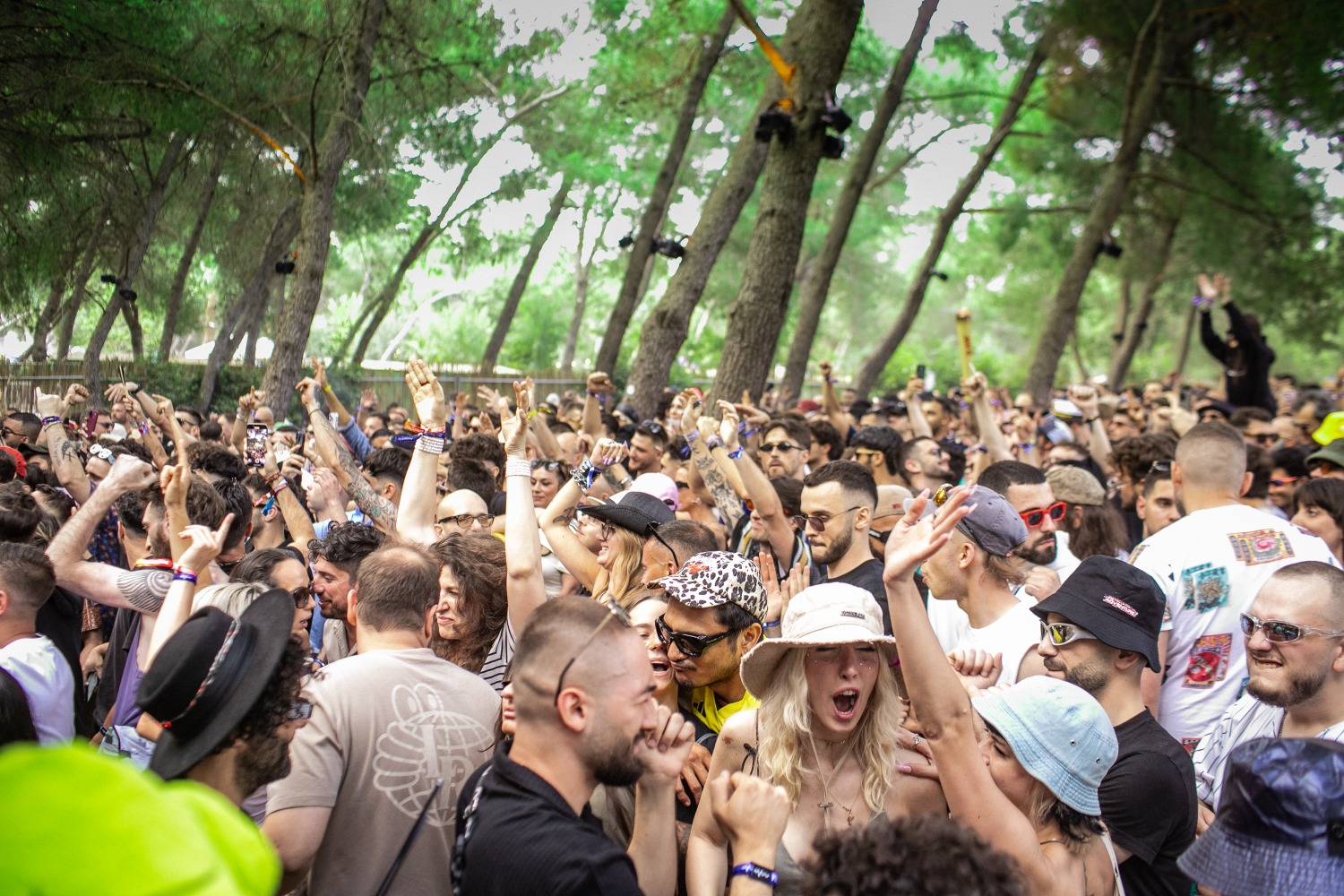
But the achievement that means most is harder to quantify. It is watching people’s faces at the festival, and hearing how fiercely they defend it. The arguments UNUM regulars get into over what their favourite festival is — people who have been to every single edition, “fighting its corner with everything they’ve got.” “That’s not something you manufacture. That’s what ‘becoming one’ actually means. That’s the UNUM way.”
There is a view, held inside the festival, that “there’s no underground without an overground.” The relationship between the two has changed with the internet, but incredible spaces still exist — parties with no phones, rooms where people genuinely just want to let go and experience electronic music at its absolute best. That never went away.
Cost pressures are real, for promoters and for ticket buyers, and there is no pretending otherwise. But the core belief is simple: “You can party how you want to party.” If people want the mega-festival experience, it is out there. But there are also festivals offering something older, more honest, more human. UNUM will always be in that second category.
“The unity, the sense of community, the becoming one at the heart of everything: that’s non-negotiable. The festival can grow, it can expand, but the moment that core is sacrificed is the moment it stops being UNUM. And to be honest, that’s the moment I’d walk away.”
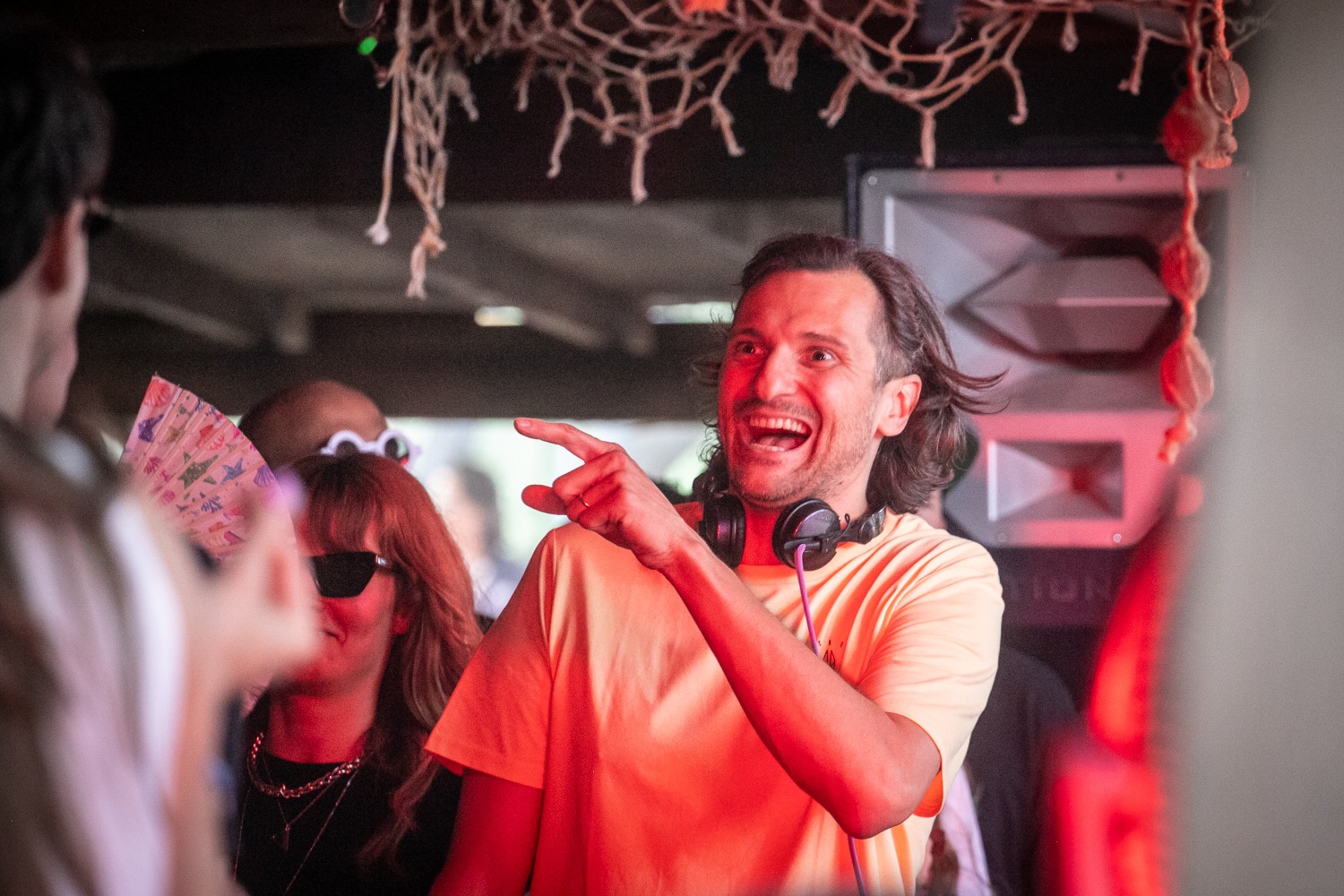
The festival is already an eight-month project each year. The final weeks are almost impossible to describe to someone who has not been through them. Even now, as the seventh edition approaches, the team is on-site building. It never fully stops.
UNUM has begun to extend beyond its annual weekend. Earlier this year, the team ran their first party in the US — Miami during Music Week. Other shows are in development. The concept, it turns out, travels wherever the values travel: “24/7 music, extended sets, stunning locations, underground people, and an experience that remains genuinely accessible.” Those are the non-negotiables. If those can be held in place, UNUM can happen anywhere.
Pushing the local Albanian and Kosovan scene further is a stated priority. Artists like Anïte are being taken to Pyramid and to Amnesia in Ibiza this summer. Satellite events are in development that will bring together the artists who make UNUM what it is.
As for what success looks like in five or ten years, the answer from inside the team is a version of “let’s get through the next two weeks first.” Which is perhaps the most honest thing a festival could say.
There are five partners driving this: Buti, Fell, Prof, Qukla, and one more, plus a whole team of people integral to reaching this seventh year. The hope is that there are at least seven more to come. “As long as the core values exist, UNUM will exist — in whatever form that takes. At its heart, it’s always been about people becoming one on the dance floor. That’s the thing worth protecting.”
Seven years in, with the community that has been built, with what it means to the people who come back every single year — “yeah. We’re already there.”
All remaining tickets are now on sale here.
More info on UNUM Festival
Website | Instagram | Facebook | RA