

There is more music being released right now than any human being can realistically process. For DJs, that is not an abstract problem — it is a daily one. Finding tracks that are not only great, but genuinely distinct from what everyone else is playing, has become one of the more quietly exhausting parts of the job. Volumo was built as a direct response to that reality.
“Volumo was created out of a simple observation: there is far more music being released than any human can realistically process,” says Alex, the platform’s co-founder. “For DJs, this creates a serious problem: too much noise, not enough signal. To succeed as a DJ, you need to play tracks that are not only great, but also different from what everyone else is playing. So we wanted to build a store that meaningfully helps each DJ to find great music that fits their particular creative vision.”
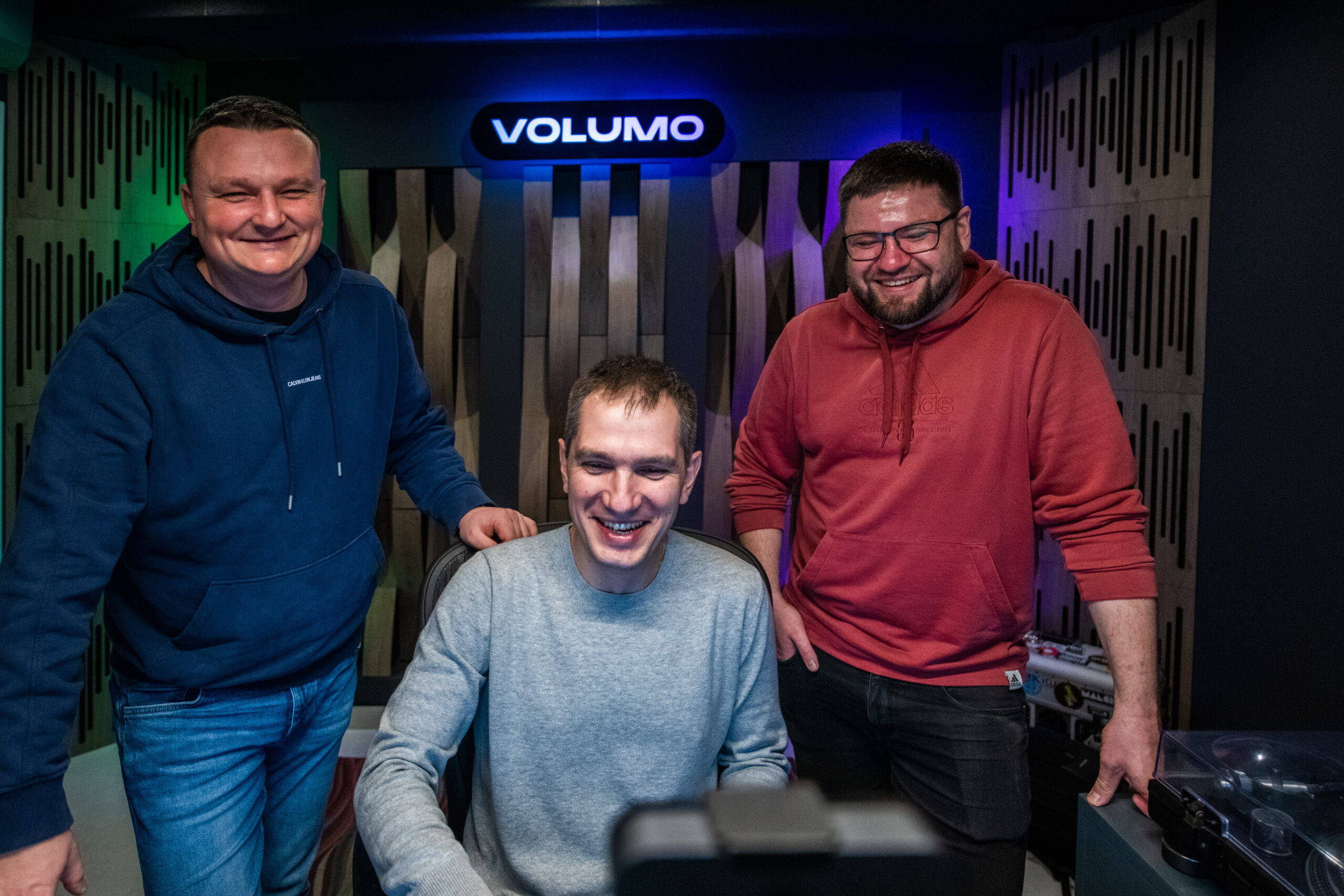
The philosophy behind the platform follows from that starting point cleanly and without complication. “Volumo is built around the idea that music discovery should be intentional and human-driven,” Alex explains. “We focus on curation, structure, and usability, making it easier for DJs to navigate large amounts of music without relying on popularity metrics and other non-creative shortcuts. Our goal is not to maximize volume, but to maximize relevance. It’s a boutique approach: you narrow down to fewer releases, but get more context, better filtering. This lets you crystallize your artistic intuition into an actual DJ set in less time and with more enjoyment of the process.”
The obvious question for any new music platform is how it sits alongside the established options. For Alex, the distinction is less about catalog size and more about intent. “The main difference is how focused our curation is. Volumo is built specifically for DJs who actively dig and select their music, and not those who just go to the main page of their favourite music store and buy what’s already there,” he says. “We de-emphasize popularity-driven ranking, and instead we prioritize structured discovery, detailed metadata, and curated entry points for deeper digging. This is your creative process, and you are in its driver’s seat.”

On the question of catalog size, Alex is direct. “What we are not trying to compete in is catalog size. We pick music that matters, while more aggressively cutting out what is outside of our stylistic focus.”
For artists and labels considering the platform, the mechanics are straightforward. The recommended route is standard industry distribution, but direct uploads are also supported for those who prefer full independence — an approach that sits somewhere between the openness of Bandcamp and the more structured requirements of a platform like Beatport. Back catalog is as welcome as new releases. “A lot of great music doesn’t lose relevance over time,” says Alex. “That’s what you would call time-tested. Back catalogues undergo the same curation as fresh music.”
One point Alex returns to consistently is the role of human curation — not as a stopgap measure while better technology is developed, but as the core value around which the entire platform is built. “Curation happens first and foremost through having actual humans listen to the music. While some other music stores treat human curation as an undesired temporary measure — just until they can finally replace everyone with AI — for us human curation is the core value around which we are building Volumo.”
That extends to how labels and artists are selected. “The main thing we look for is the intention behind the music,” Alex says. “We tend to work best with labels and artists who treat what they release as something crafted, not just produced for volume or visibility. Music that reflects time and care that has been put into it, and has a clear artistic direction, will naturally stand out.” Usability for a working DJ is equally important. “We want tracks that you as a DJ would genuinely want to play, not just scroll past. Why would you want to release music that you yourself wouldn’t play? This is a mistake that we’d like to warn everyone about.”
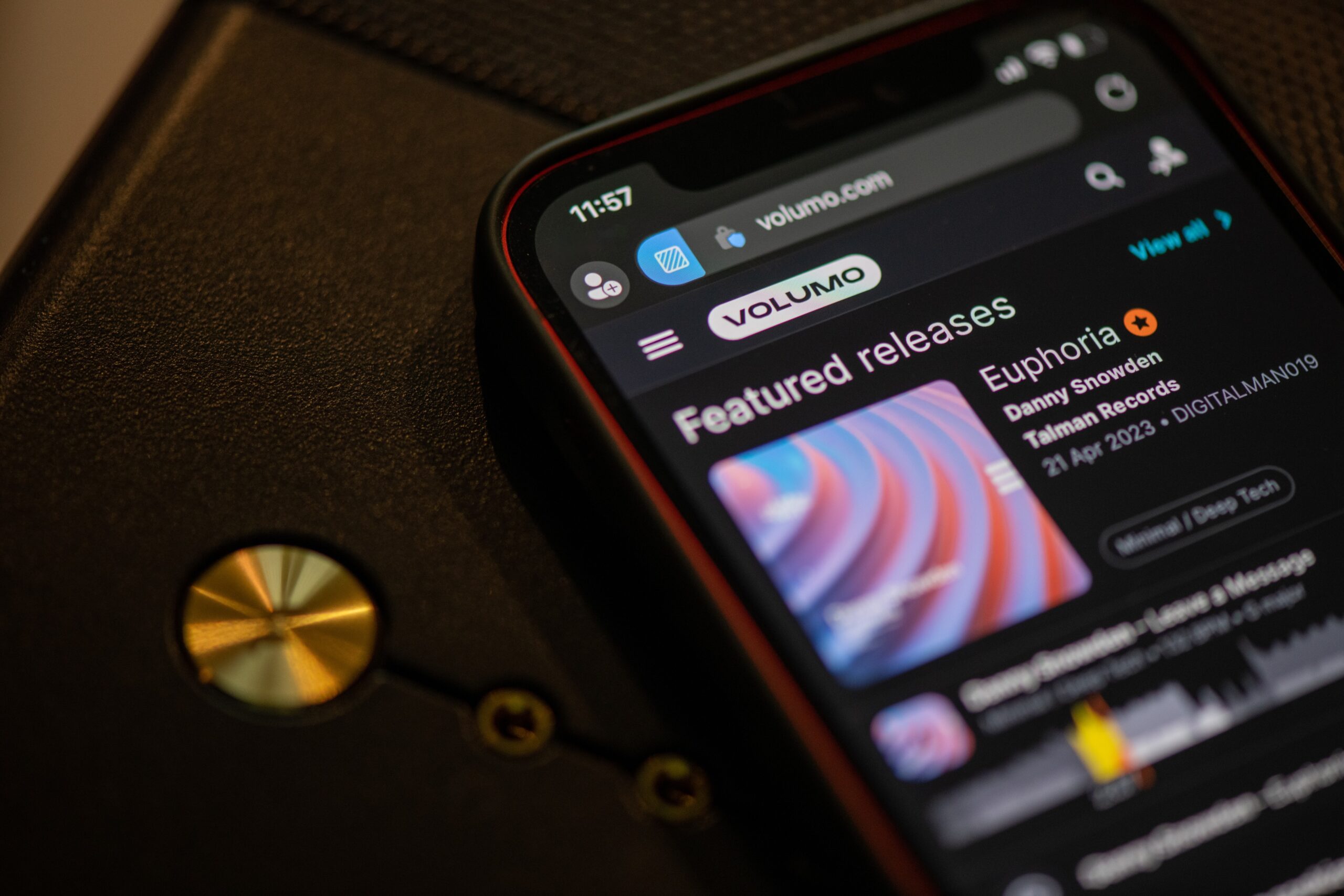
The message to anyone considering submitting is consistent: consistency, identity, and a long-term approach to music will always carry more weight than volume of output.
Sam — known in the music world as Okain — joined Volumo first as an artist before his involvement deepened into something more central. “I first joined Volumo as an artist, under my alias Okain, through their exclusive series,” he explains. “Then I started bringing in other producers because I really liked what they were building. Step by step, I got more involved, and today I’m working across artist and label relations, as well as partnerships with media platforms and creators.” His presence on the artist and label side gives the platform a grounding in the practical realities of what working musicians and labels actually need from a store.
The long-term ambition is straightforward and, given the current landscape, not without relevance. “The long-term goal is to build a platform where music discovery remains human, artistically intentional, and of course pleasant and time-efficient,” says Alex. “We want Volumo to become a trusted environment for DJs to find music without noise, and a reliable additional revenue stream for labels that value curation, longevity, and healthy creative competition.”
In a market where the dominant platforms are built around scale and algorithmic recommendation, a store that bets on the opposite — fewer releases, more context, human ears making the calls — is a considered position to take. Whether it lands depends on whether enough DJs and labels share the same frustration with the noise. The signs suggest plenty do.
More info on VOLUMO
Website | Instagram | Facebook