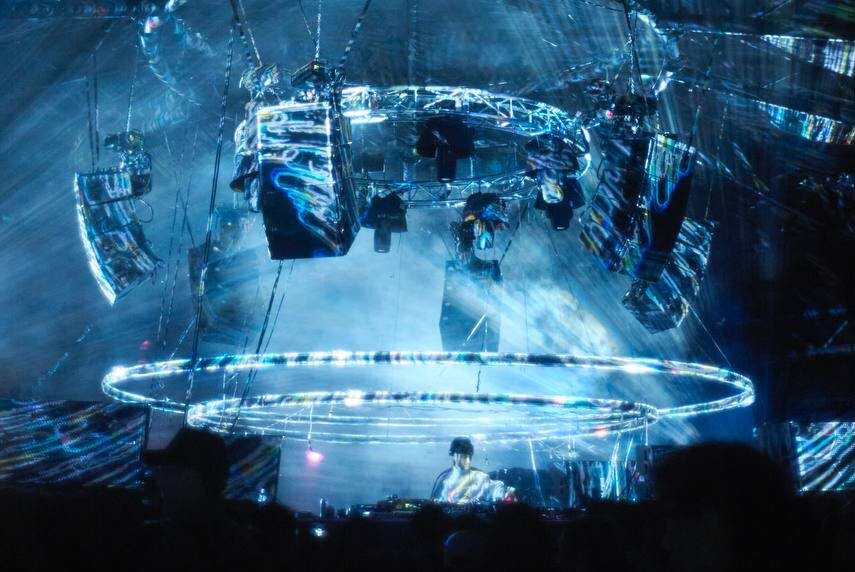
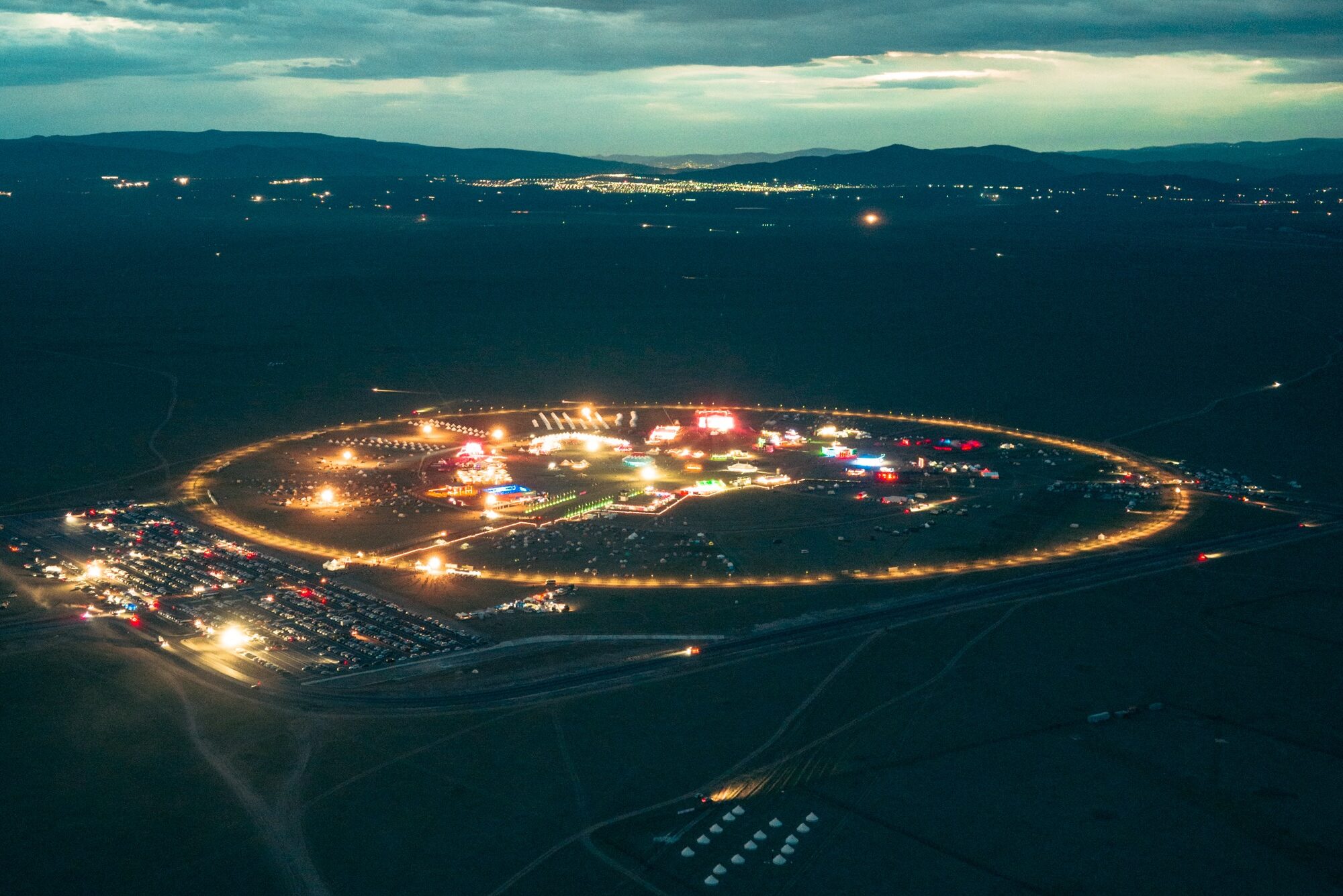
Playtime Festival has spent more than two decades introducing new sounds to Mongolia. Beginning primarily as a live music event in 2002, it has gradually expanded into a broader platform where bands, DJs and experimental artists all share the same space. Electronic music arrived later, but its presence has continued to grow, bringing a new generation of artists and attendees into the festival’s orbit.
Trommel joined that story during this year’s three-day event, where we caught up with Playtime musical director Nomtii and emerging local DJs Bu.cca and Naim. Their different experiences offer a view of how the festival has developed from a home for local bands into an institution capable of nurturing an increasingly adventurous club culture.
“Playtime started as a live music festival,” Nomtii explains. “Around ten years ago, we began introducing electronic stages and we’re still developing them.” One of the first dedicated spaces was the techno-focused Naaglihats stage, followed by Fire, Disco Ger and more recently, Grove, all of which are expanding with each edition. “Every year, we see more and more people coming.”
With a relatively young population, Mongolia has an audience increasingly willing to explore beyond familiar sounds. Playtime has become an important point of entry, not just for electronic music but for local artists across all genres. “Every young Mongolian artist usually starts through Playtime Festival,” says Nomtii. This is also true for the director himself. As a member of the Mongolian band The Colors, he has been performing at Playtime for around fifteen years. “It was our first stage, and it has been the first stage for many other bands too.”
In that sense, Playtime is more than just an annual gathering. It provides an early platform where young musicians can both perform, discover new artists and begin seeing music as something they might pursue themselves. For Bu.cca and Naim, that pathway came partly through Nomtii’s own work away from the festival. “I started DJing two years ago,” says Bu.cca, while Naim began around four years earlier. Both attended the music production course Nomtii established locally. “We went to his production class,” they explain. “It was after that we started DJing.”
Their development illustrates how knowledge is gradually being passed from one generation to the next. Although Nomtii’s own path began with live music, he eventually moved into electronic production and performance. His first major experience outside Mongolia came around six years ago, when he toured nine Asian cities with a live set. “That was inspirational and I have great memories of that tour,” he says. A later booking at Air House Festival in South Korea was another defining moment. “It was my first big festival booking outside Mongolia.”
Despite his role as musical director, Nomtii avoids narrowing his taste to a particular genre or established group of names. “I like every genre of music,” he says. “It doesn’t matter to me who produced it or who is playing it. Good music is good music.” That said, between Nomtii, Naim and Bu.cca, they pointed to artists including Axel Boman, DJ Masda, Jane Fitz and Vladimir Ivkovic as all being particularly influential.
Playtime’s direction is not built around chasing trends or booking only popular artists. Instead, the team aims to introduce audiences to music they might not otherwise encounter. “People outside Mongolia often think only of it being a place of nomadic culture,” Nomtii says. “But in the city, there are so many cool and open-minded people who really love music.” For many young attendees, discovering an unfamiliar artist becomes one of the most important parts of the experience. “People come to Playtime and find new music, new stories and new inspiration,” he continues. “Young people discover artists here.”
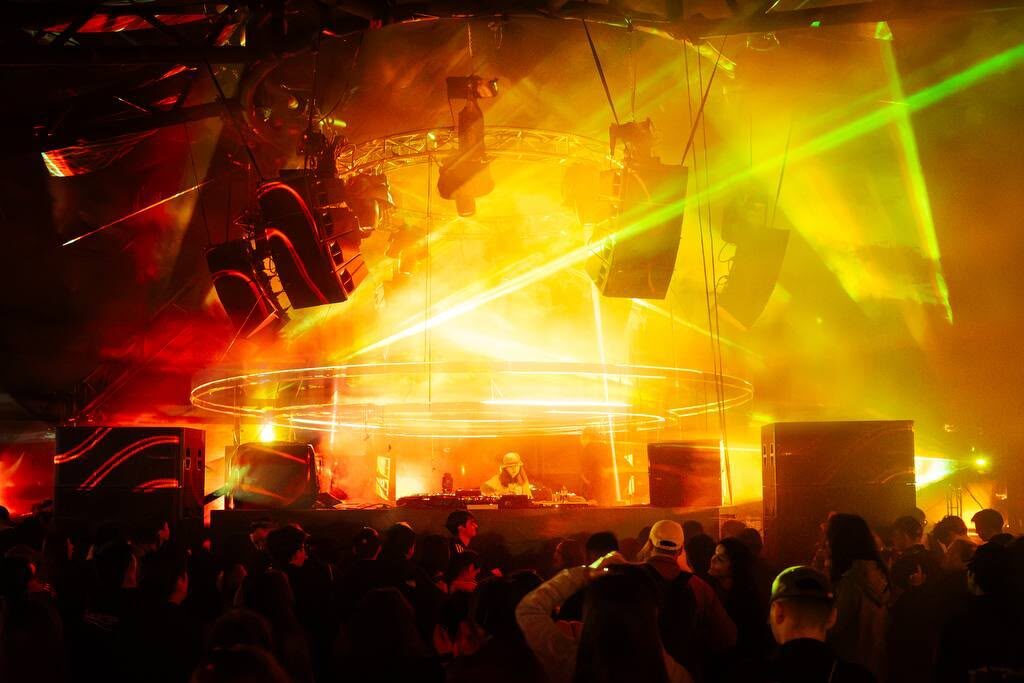
This commitment to discovery is gradually spreading beyond the festival grounds. The team currently operates Tipi Bar, a space that has started welcoming more international guests into Mongolia’s local scene. Recent bookings have included artists from Europe, South Korea and further across Asia, with the programme continuing to grow throughout the year. The venue has already hosted the likes of Mogwaa, Lena Willikens and Jesse You, all in the space of a few months. The opening of a new club is also on the horizon, another space that will partner with the festival.
As Mongolia’s electronic scene becomes more visible, Playtime is doing more than simply responding to growing interest. Through education, international collaboration and a willingness to introduce its audience to something unfamiliar, the festival is helping create the conditions for that interest to deepen. From its beginnings as a live music gathering to the growing presence of electronic music, Playtime has become a place where artists can find their first stage, audiences can encounter their next inspiration and Mongolia’s club culture can continue developing on its own terms.
More info on Playtime Festival
Website | Instagram | Facebook