Tomoki Tamura has spent two decades moving between the clubs of Osaka, London, Tokyo and Berlin, and he is now residing in Berlin. He is the founder of Holic Trax and one half of the duo Doublet, and he also plays under the name A Time Traveller, a guise for sets that stray beyond the dancefloor. We caught up with him about nerves, record bags, and what ties a label together.
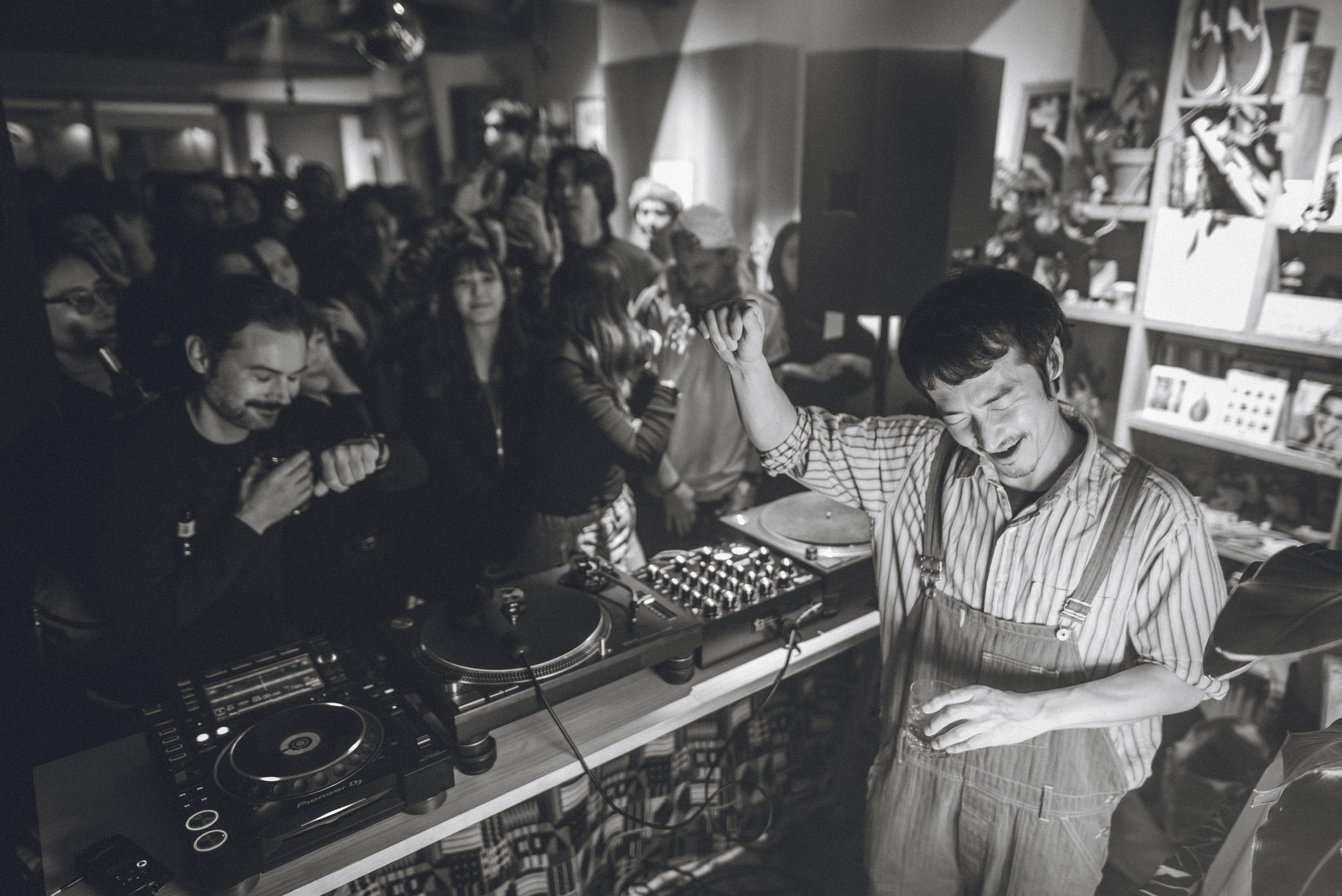
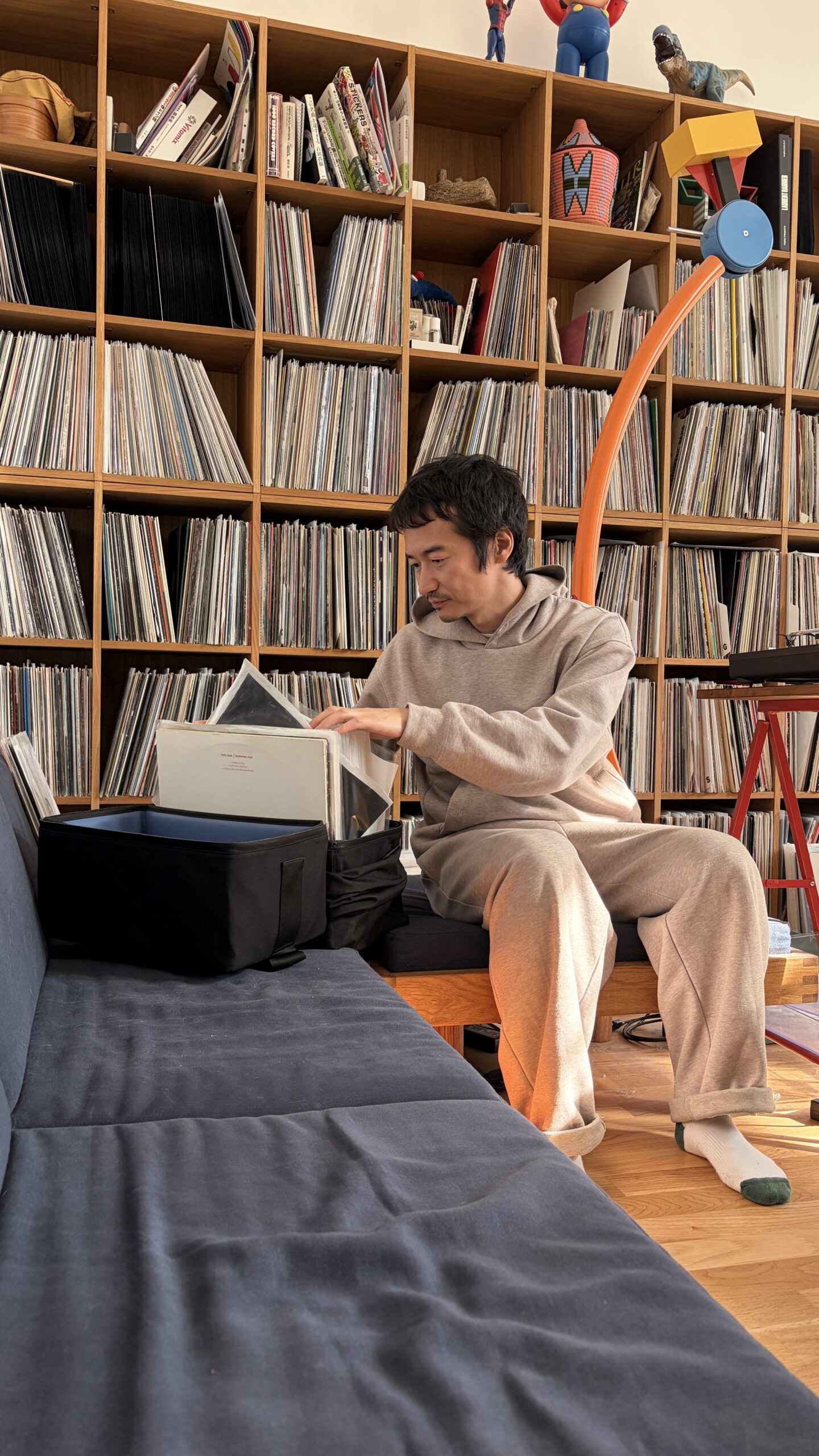
Tamura’s career began in the dark, close quarters of a small Osaka club. As a teenager, he worked as a bartender at the underground club Club Flatt. Twenty years later, he plays rooms of all sizes, from intimate parties to crowds of thousands. We opened by asking whether his relationship with nerves and performance anxiety has changed since those early nights at Club Flatt, now that he has two decades of DJing behind him, “Of course, when I first started DJing, I was extremely nervous. I think I was constantly thinking about the mixing and how to get the crowd excited, so I was probably overthinking a lot of things. These days, I don’t get nearly as nervous as I used to. I might actually be more nervous when I’m at home choosing records before going on tour. I’m quite indecisive, so I often spend way too much time trying to decide which records to take with me.
Tomoki is now regarded as one of the finest party starters on the world circuit and is rightly seeing his stock rise on a gig-by-gig basis. With this jump in notoriety comes with it a level of expectation to perform to a high standard; we asked Tomoki if this is something that he is aware of, “Of course, I still feel pressure, but I think it’s more a sense of responsibility than nervousness. Promoters and club teams put a lot of time and effort into creating a party, and they are inviting me to be part of it, so I always feel a responsibility to live up to their expectations. And of course, people are taking their own time and spending their money to come to the party, so I want them to have a great experience and go home feeling satisfied.”
He goes on to explain how certain situations can be that little more nerve-racking, “That said, sometimes I arrive at a venue expecting a crowd of a few hundred people, and then I realise there are actually several thousand people there. That can still be a little surprising and make me nervous. But once I start DJing and play the first one or two records, that nervousness gradually goes away. And I don’t think being nervous is necessarily a bad thing. I think a certain amount of nervousness can actually help you focus more, and ultimately lead to a better performance.”
Osaka’s underground in the early days gave Tamura a front-row education. His style is influenced by black roots house music from the United States, and he built his career in the city’s major clubs before moving to London. Larry Heard, Theo Parrish and Moodymann are three of the US house figures who passed through those small rooms. Since that early education was so formative, we enquired how much of those nights at Club Flatt still shapes how he DJs today: “I’m really grateful that I was able to have those experiences when I was starting out as a DJ. I was lucky enough to see true legends like them playing long sets up close. I was completely blown away by the way they could create a story throughout the entire night with their DJing. The roots of my DJ style definitely come from the US house music I was listening to back then.”
Japan has always had a deep connection to electronic music, and Tomoki goes on to explain just how important his time in Japan was: “I’ve experienced so many great clubs and parties around the world since then, but I think the underground house scene in Osaka at that time was just as good as any of the great parties I’ve experienced around the world. That’s why being able to start DJing in Osaka during that period has been such a valuable experience for me, and something that has stayed with me throughout my career.”
Holic began as a London party after Tamura moved to the city in 2004. It grew into a staple of London’s nightlife, with a residency at the notorious The End/AKA nightspot elevating the party’s status. He later landed a permanent residency at Womb in Tokyo, which created a link between the two cities’ underground scenes. Almost a decade after the party began, the Holic Trax label launched in 2012 with a release from Mr G. We wanted to know when he realised that Holic, which began as a party in London in 2004 before becoming a residency at Womb in Tokyo and eventually a label, had grown into something bigger than a night out. “Honestly, I don’t think I was thinking about it that deeply at the time. I remember how hard we worked to promote the party, going around to different record shops and asking if we could put up posters, handing out flyers, and just doing everything we could to get the word out.
Holic as a party was beginning to gain traction, but it was interesting to hear Tomoki explain how this progressed from a club night to a functioning record label: “Gradually, as we started putting together the DJ lineups and choosing guest DJs, we tried to develop our own unique sound and kept working on the party, experimenting and finding our own direction. Starting the label from there also happened in a very organic way. It wasn’t like we made a big decision and said, “Okay, let’s start a label.” It was more of a natural progression, and before we really realised it, we had started one. I think it was when the label gradually started to gain momentum that I first felt Holic was becoming something more than just a party.”
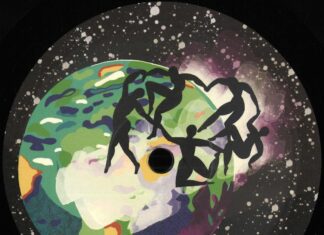
Holic Trax is no one-man outlet. It has also been the main home for Doublet, Tamura’s collaboration with the Italian Ibiza resident Tuccillo, as well as sub-labels Boothoic, Monoklo and Tom Tam Club. As a label owner, Tomoki constantly has to balance his own taste with openness to others, so we asked how he stays a curator with a clear identity while letting artists push Holic Trax somewhere he might not have gone alone: “Basically, the most important thing for me is releasing music that I genuinely love. Since it’s my own label, my musical taste and instincts naturally come through in the music we release. At the same time, I want to release music that has a strong identity and really represents the artist. He goes on to explain, “So even if something is a little different from the direction I originally had in mind for Holic Trax, if I feel something special in the music, I want to release it. I think Holic Trax’s sound has gradually expanded by staying rooted in my own taste while also getting new inspiration from the artists I work with.
Having released more than 50 records across Holic Trax and its sublabels, collaborators include Satoshi Tomiie, Mr. G., Rick Wade and Kate Simko. With Holic Trax now well past a decade and releases, we asked what ties such a varied roster together under one label identity: “It’s really difficult to put into words, but if I had to describe it in one phrase, I would say timeless, quality house music. Tomoki goes on to add, “I think I’ve always chosen music for the label with the dancefloor in mind. I don’t have any specific ideas yet, but I think it could be interesting to release music that has absolutely nothing to do with the dancefloor.”
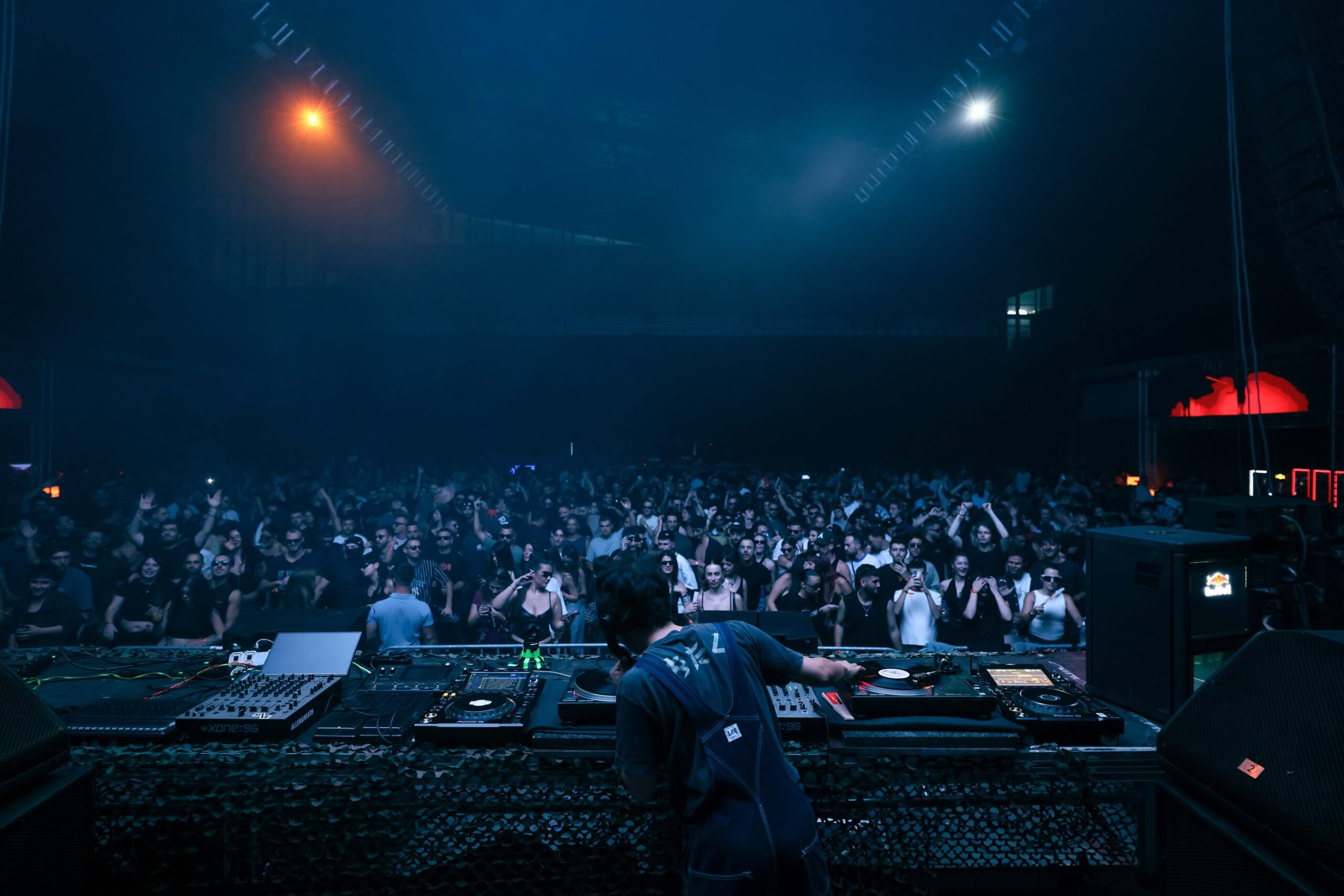
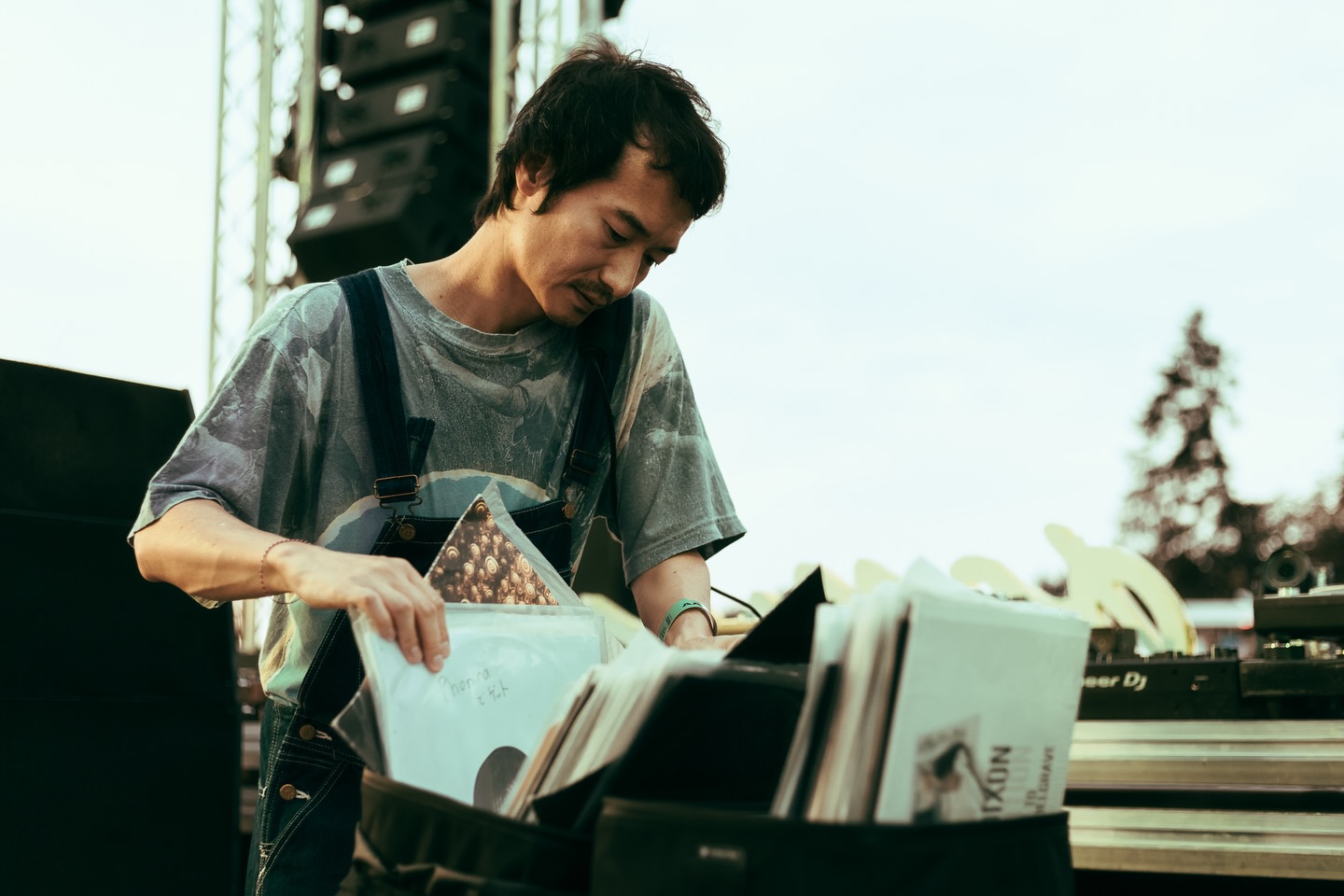
Tamura is not just a club DJ as his alias – A Time Traveller circumnavigates sounds that go far beyond the dancefloor. Since these sets stretch into jazz, ambient and downtempo, we asked when he reaches for that side of his record bag and how he reads a crowd’s readiness for it: “Maybe you’re referring to when I do listening sets. I occasionally do listening DJ sets under the name “A Time Traveler.” My record collection at home is, of course, mostly dance music and house, but I also have a lot of other music, including jazz, disco, downtempo, ambient, and old Japanese records. I sometimes play those records during my listening sets.
But even in my regular DJ sets, I sometimes play music outside of house and techno. Rather than mixing by matching the beats, I guess I tend to mix more through the atmosphere and flow of the music. I guess it’s really about creating a story. It’s almost like trying to hit people in the heart with something through my selection. It’s difficult to put into words. You really just have to come and listen for yourself.”
Tamura has lived in three of the world’s most influential club cities. He grew up in Osaka, built Holic in London, and is now based in Berlin. To close, we asked what he thinks Tokyo could learn from the way Berlin’s underground operates, or the other way around, given a career spent connecting scenes from Osaka to London to Berlin, “I think one thing that’s really impressive about Berlin is the way it has made its underground club culture accessible to a much wider audience. There is probably a certain amount of support from the city as well, and I feel like club culture is really established as an industry in Berlin. There are also so many people coming from all over the world specifically to experience Berlin’s club culture. I think that’s something really special about the city.
He goes on to explain a little about his home scene, “Tokyo feels quite different to me. I feel like individual clubs and party promoters tend to dig much deeper into the underground and create their own very specific worlds. There may not be as much support from the city itself, but I think the passion and curiosity of individual clubs and promoters to explore the underground is incredible. Because of that, there are so many parties in Tokyo that are very individual and have a real depth to them.
So I think the approach is quite different in Berlin and Tokyo, but both have their own strengths.”
More info on Tomoki Tamura
Instagram | Facebook | RA | Soundcloud | Bandcamp | Discogs
More info on Holic Trax
Instagram | Facebook | RA | Soundcloud | Bandcamp | Discogs