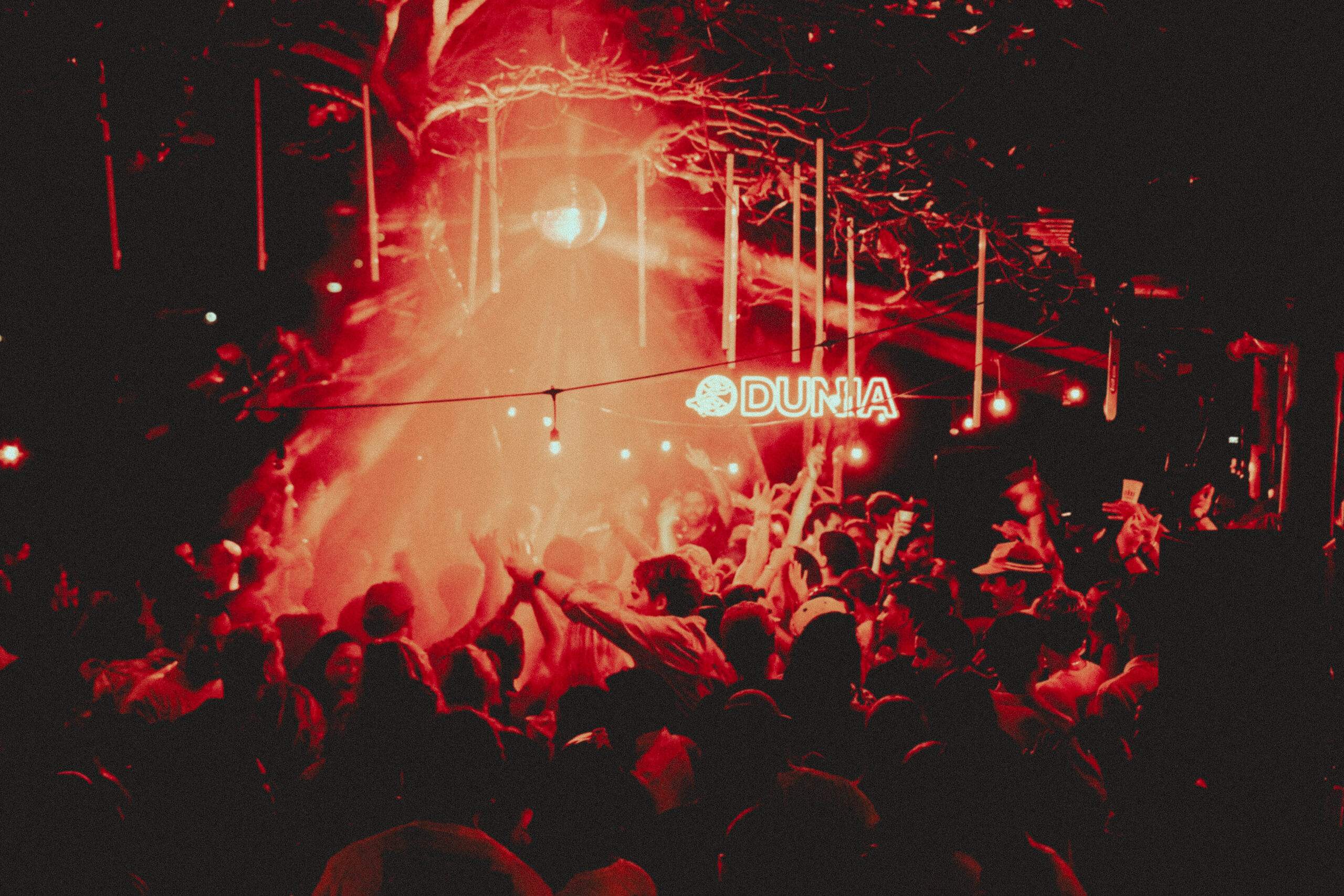
Bali’s electronic music scene has expanded rapidly in recent years, shaped by the island’s international population, a growing appetite for nightlife and an increasing number of promoters searching for more distinctive sounds. Within that landscape, Dunia has carved out its own place. Founded in Bali by Indonesian DJ Gibs, the platform has developed around careful curation, international exchange and a desire to connect Indonesia with emerging scenes around the world.
From the beginning, the idea was never to follow one narrow sound. That becomes clear when looking at Dunia’s bookings. Artists such as Cristi Cons, Priku and Raphael Carrau have appeared alongside newer names from different corners of the underground, reflecting a musical direction that Gibs sees less as a change and more as an expansion. “We’ve been building Dunia for the past two years,” he explains. “We’re going deeper into the spectrum of what we like and enjoy and what we want to represent. We take the curation very seriously.”
For Gibs, established artists remain important, particularly those who have helped define the scene over many years. But just as important is creating space for voices that may not yet have received the same level of attention. “Dunia actually means “world” in many languages, so we want to be representative of the name as well, showcasing different sounds from different parts of the world.” That philosophy has led the team to look beyond the most obvious European centres, towards scenes developing in places such as Uruguay, North Africa, Kazakhstan and Tunisia. “It’s important for us to not just focus on the people who are the most popular, the most famous or the most respected, but also make sure that we take the time to show the other people who are also talented in other parts of the world.”
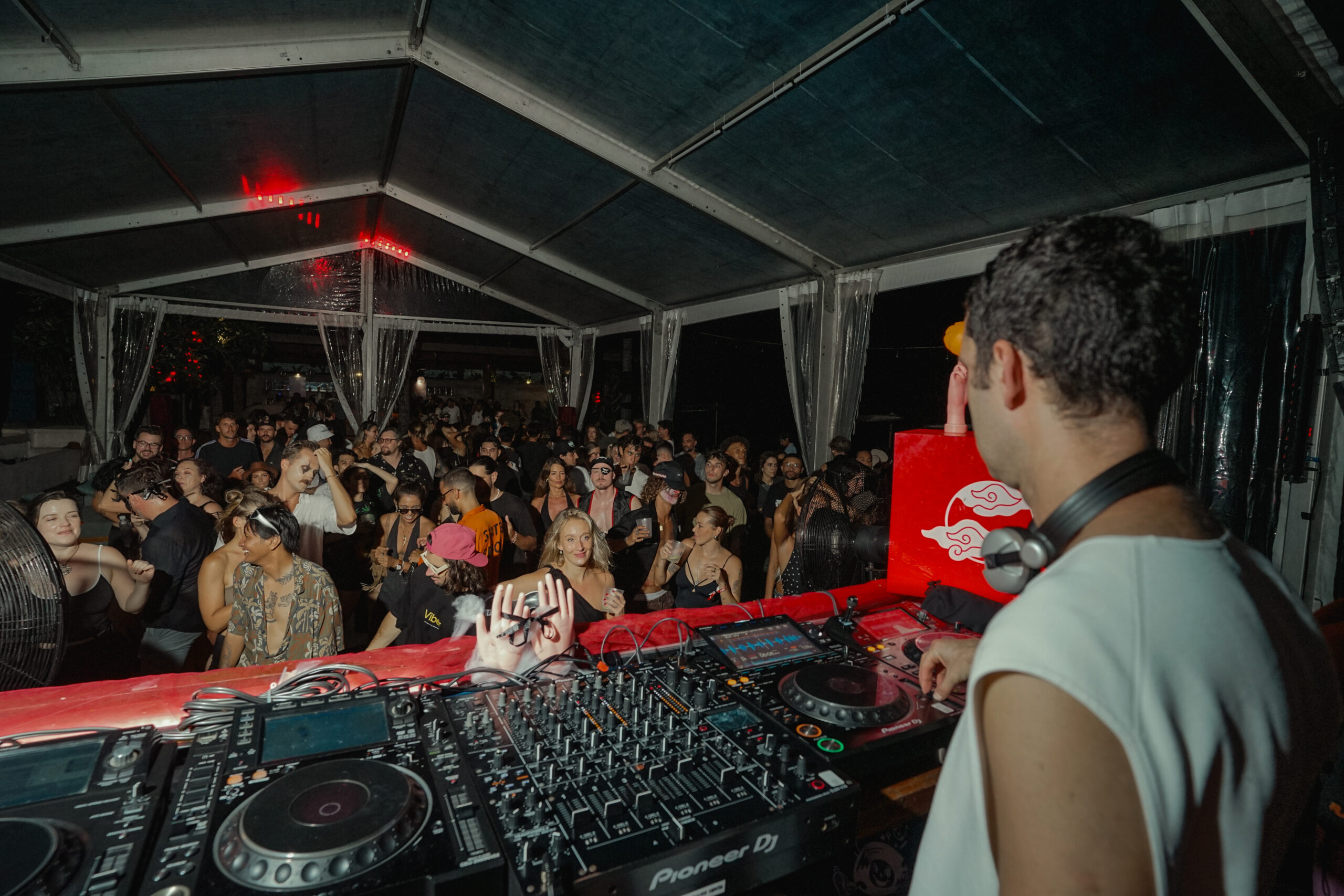
Bali provides an interesting setting for that approach. The island’s relationship with electronic music stretches back decades, even if the scale and infrastructure around it have changed considerably. “The music and party scene in Bali has always been going on for the past 20 or 30 years,” Gibs says. “But I think there’s a crossover between electronic music becoming more of an industry, more people investing in it and then Bali being one of the places where people come here to party seven days a week.”
At one end of the spectrum sit large clubs hosting major international names, while at the other end are smaller projects searching for something more niche. “I think that’s the butterfly effect of more people being into electronic music. As it grows, tastes develop and we’re one of those places hosting artists who cater for that sound.”
The pandemic accelerated that shift further. Bali attracted people from around the world who decided to relocate permanently or semi-permanently, bringing their own musical references with them. “This created a boom as more people were looking for new music, which in turn meant new clubs started to open. Where there used to be only three venues, now there’s seven all competing against each other.” That competition has helped raise the level of both bookings and production, creating a nightlife landscape far denser than it was only a few years ago.
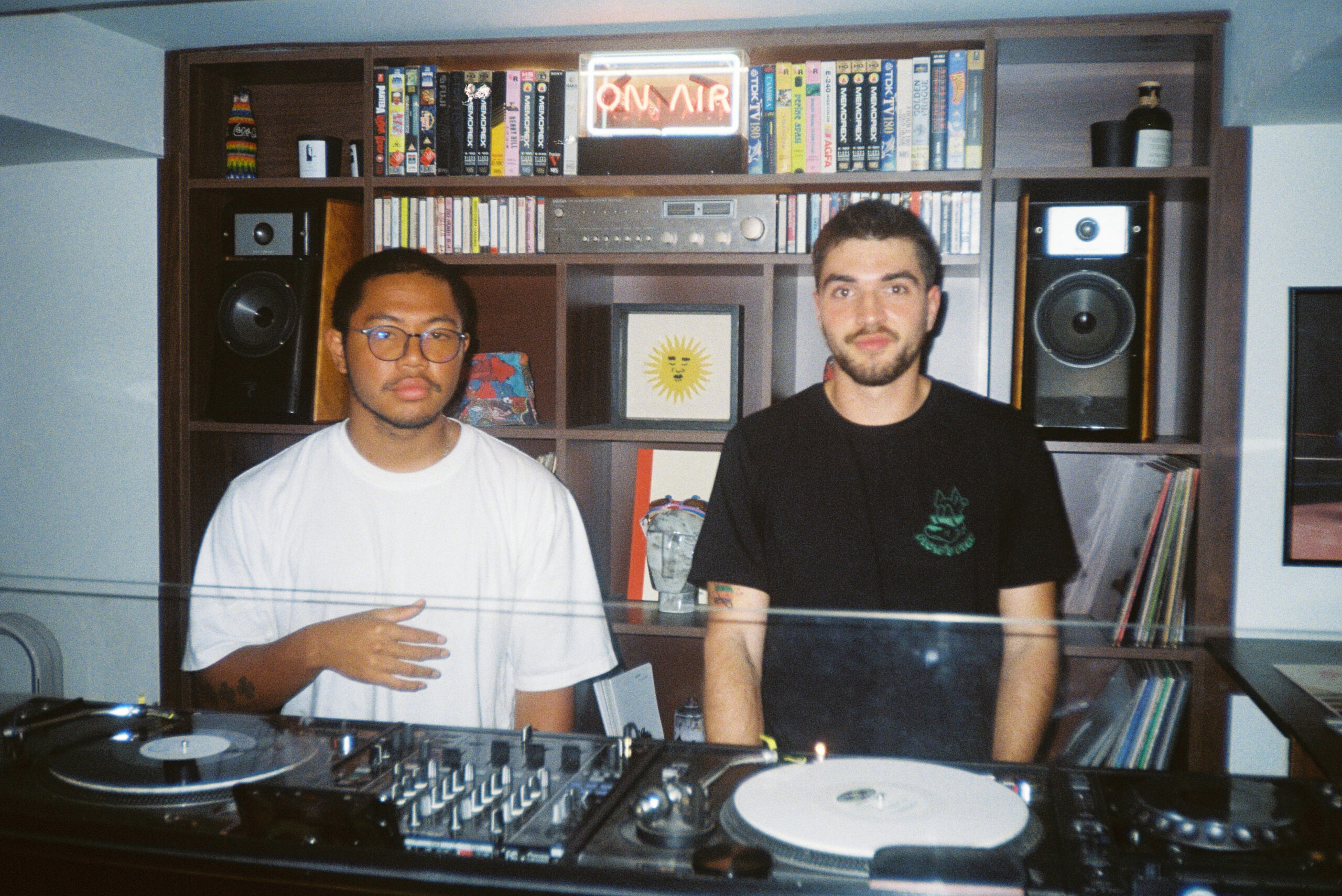
Gibs’ own route into electronic music began much earlier. Like many Indonesians of his generation, his first exposure came through the EDM boom of the early 2010s. “When I was in high school, EDM blew up,” he recalls. “We would sneak out to EDM festivals when we were in our early teens.” His musical perspective changed dramatically after moving to Chicago for university. There, he and his friends began hosting a radio show on WNUR 89.3, unknowingly placing themselves immediately after a programme hosted by figures deeply embedded in the city’s house music history. “Every time we came in, there was a show before us that was super unique,” he says. “Derrick Carter, Michael Serafini and Garrett David, a lot of artists from Smart Bar and Gramaphone Records. We’d come early every time just to listen.”
Those encounters opened the door to a deeper relationship with house music. Gibs started visiting record stores. “We’d go to the record store every week, buying records or even just listening to them because we couldn’t necessarily afford them all!” In 2019, that curiosity took him even closer to the origins of Chicago house when he approached Trax Records looking for work. “I messaged them asking if they had anything I could do there. I wanted to see more of the origins of house music.” He ended up helping archive and catalogue two-inch tapes from artists including Larry Heard and Frankie Knuckles. “From there, I just kept getting deeper into different scenes.”
That experience would later influence Dunia’s wider philosophy. Rather than treating music as something isolated by geography, Gibs became increasingly interested in how different communities exchange ideas. “It was all very much based on community.”
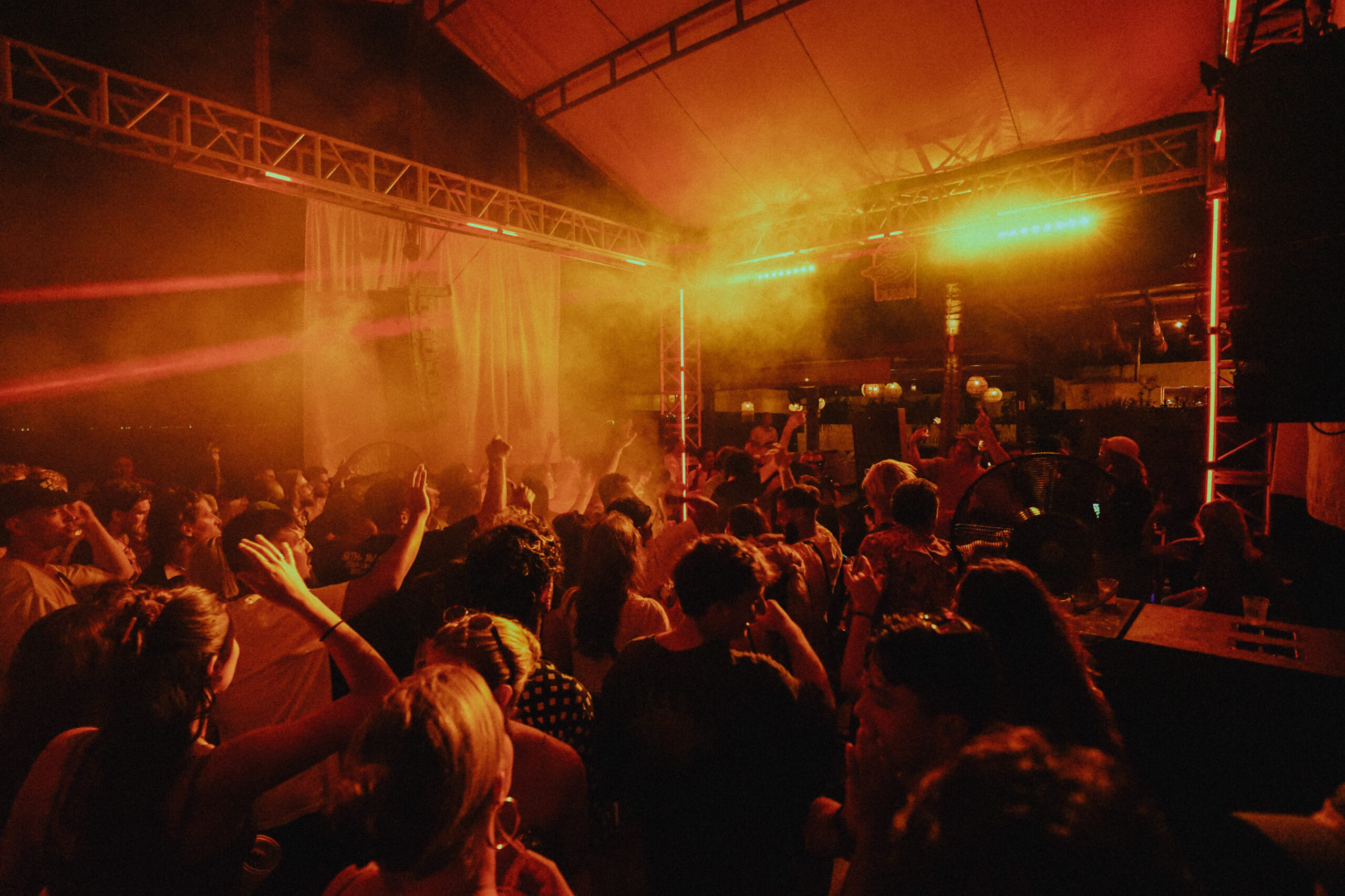
This idea now sits at the centre of Dunia’s next phase. The team launched its label in February 2025, initially on vinyl before later adding digital releases to make the platform more accessible to local producers. Though the ambition stretches beyond releasing music. Dunia wants to help Indonesian artists reach other parts of the world while also bringing outside artists into Bali. “This is our biggest goal.”
The team has already begun placing artists into shows in locations such as Malaysia, Turkey and the UK, while continuing to invite international guests to Bali. Gibs describes the process simply as ‘a cultural exchange.’ “That for me was always the mission of Dunia,” he says. “Exchanging and sharing culture and learning the communication between different worlds. Bringing people together.”
That same openness is reflected in the artists who have influenced him personally. Cristi Cons stands out not only musically but through his work ethic and philosophy. “He’s been very influential, we’ve actually invited him here twice already.” Traumer has also played an important role in shaping Gibs’ approach to DJing, particularly through his groove, consistency and relationship with his audience. “It was such a crazy moment when he came to play last year in May. I was playing before him at the after party and when I handed over, he played a track and gave back the headphones. All of a sudden I was playing back to back with someone I had been studying so much.” HearThuG provides another reference point, both artistically and personally. Gibs recalls of first hearing him in Paris at Cabaret Sauvage. “In terms of artistry, it’s like you can’t find another person that sounds like him in his own niche.”
For Gibs, that individuality remains central to what Dunia is trying to build. As Bali’s nightlife continues to expand, the aim is not simply to add another party brand to an increasingly crowded landscape, but to create something that reflects the meaning behind the name itself. A platform connected to the world, bringing different sounds into Bali while helping Indonesian artists move beyond it.
More info on Dunia
Instagram | RA