
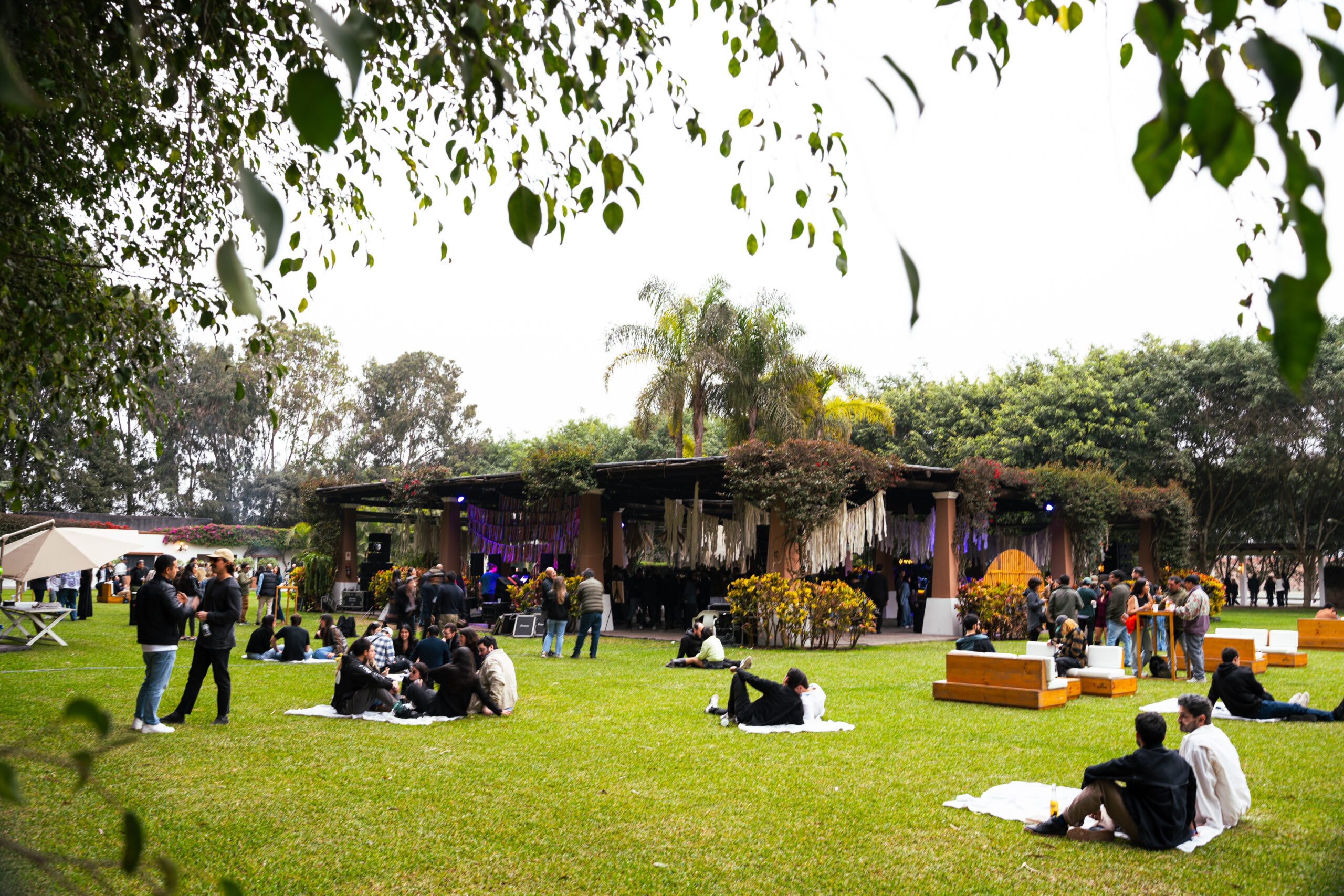
For more than twenty years, 4Beats has been a fixture of Lima’s electronic music scene, bringing people together on the dancefloor and challenging what a night out in Peru could look like. Now the collective is entering a new chapter as a non-profit cultural association, with a new anchor event and a record label on the way. We sat down with Andrés to talk about where it all began, what it took to get here, and what it means for the community that has grown around it.
Every scene has a starting point. For 4Beats, it was a Thursday night residency at Gótica in 2005, with Andrés behind the decks as resident DJ. A few years later, a group of friends began asking what the project could become and what they wanted it to stand for. We asked Andre to take us back to the beginning and to explain the original vision for 4Beats, “It all started in 2005 with Jueves de Electrónica at Gótica, where I was the resident DJ. By 2009 I was getting more involved in shaping where the project was going, and a few friends and I sat down to figure out what we wanted 4Beats to become.”
Andrés continues to explain, “The idea was simple. We were clubbers, and we wanted to share the incredible moments we’d each had on the dancefloor. We wanted to build spaces where people could come together through electronic music and feel that same connection. We also wanted to push the boundaries of what was on offer in Peru at the time, introducing people to new sounds and challenging their ears, while keeping the experience genuine and open.
It grew into something much bigger than I ever imagined, but the essence hasn’t changed. Music, community and the freedom to express yourself are still at the heart of 4Beats.”

A shared vision is one thing, but turning it into a living event series is another. From 2009 onward, 4Beats kept looking for new ways to present electronic music, rethinking not just who played but where, when and how people experienced it. That restless streak took the project from the club to the daytime, and from the city to the mountains and the beach. Andrés goes on to explain what pushed him to start an event series of his own, “When I took on more of a leadership role in 2009, we felt a constant urge to bring something new to the scene, not only through the music we curated but through the experiences around it. We started experimenting with different concepts and settings, and we became the first promoters in Peru to throw daytime electronic music parties. We took things out of the city too, to the mountains and the beach, creating our own concepts and new ways for people to connect through music.
He goes on to say, “That led to Summer Vibes, Sun Grooves, the 4Beats Anniversaries and eventually Inti Fest, an ecological and cultural electronic music festival. We also teamed up with international brands on projects like Rebel Rave and Flying Circus. For me, it was always about pushing things forward, challenging conventions and finding new ways for people to experience the music we love.
Ambition comes at a price. Running an independent electronic music project in Peru means juggling venues, funding, licensing and bookings, often with little outside support. Behind every successful night sits a long list of obstacles that most people on the dancefloor never see. It can’t have been all smooth sailing. We explore what have been the toughest challenges of running an electronic music project in Peru, “Finding sponsors and keeping our events financially sustainable has always been the big one. The experiences we believe in take serious investment, and it isn’t easy to find brands willing to back independent electronic music.
There’s also very little institutional support for electronic music and independent culture here. In some European countries, cultural organisations can tap into public funding and grants, but those options are far more limited in Peru, especially for electronic music. Permits and licensing can be frustrating as well. Even when you do everything by the book, you can run into needless bureaucracy and, at times, corruption getting in the way. On top of that, there’s still a stigma around electronic music and nightlife that makes it harder to earn support and recognition.
In the end, the hardest part is balancing all of it while staying true to our vision and keeping the project afloat. We’ve had to navigate that throughout our history.”

After two decades of building from the ground up, 4Beats has made a decision that reshapes how it operates: it is becoming a non-profit cultural association. For a project with such a long history of doing things its own way, the move says a lot about where its priorities lie. We wanted to know how the idea took shape and what convinced the team it was the right path, and did they arrive at the decision to become a non-profit? “Honestly, it felt like the natural next step. After more than twenty years of building a scene around electronic music in Lima, I wanted 4Beats to do more than throw parties. I wanted to give everything we’ve built a structure that can last, and becoming a non-profit cultural association felt like the most honest way to do that.”
A new legal structure is only the beginning. For 4Beats, the real question is what it changes for the people who have shaped the scene alongside them: the dancers, the DJs and producers, the independent collectives and everyone else who keeps this culture alive. The answer points toward learning, opportunity and a space where everyone feels they belong. It was interesting to learn what this meant for 4Beats and the wider community that surrounds it, “For us, it’s a deeper commitment to electronic culture in Peru. But this was never just about us. The community is the people on the dancefloor, the DJs and producers, the collectives and everyone who makes this culture possible. We want 4Beats to be a place for them to learn, find real opportunities and be heard, through talks (like our upcoming one on mental health and inclusion in the electronic music scene), workshops and collaborations with other independent collectives.
We’ll also keep protecting what matters most: a safe space where everyone is a protagonist, not just whoever’s behind the decks, and where there’s no room for discrimination, abuse or harassment.”
For longtime regulars, the dancefloor is what matters most. Any change to how 4Beats works raises an obvious question: will the nights themselves still feel the way people remember? The promise is that the spirit stays intact, with something new layered on top. We go on to discuss if the events themselves will feel different going forward, “The dancefloor stays at the heart of everything, and our events will still feel like 4Beats: close, community-driven and open to everyone. What changes is that most events will come with something extra, a cultural layer built around the music and the people who keep the scene alive. Think talks, workshops, masterclasses and livestreams that share their experiences and knowledge. As a non-profit cultural association, every gathering becomes a chance to learn, connect and give back to the scene.”

All of this leads to what comes next. The new chapter begins with a daytime gathering in December, a full day of music, activities and community in the spirit 4Beats is known for. After that comes a record label, a way of carrying the sound of the dancefloor beyond the night itself and pointing Peruvian talent toward the wider world. We finish off our chat with Andres and his team with the biggest question of all: what is next for 4Beats, “Destino is the first step, and the event that unveils this new chapter. It’s a daytime gathering on December 5, running from 12 pm until 2 am, with artists from Peru and abroad and plenty going on throughout the day: a chill zone with games, a bonfire at sunset, free water during the event and food with vegan options. We want it to become our anchor party, one that grows every year alongside our community.
Next up is our record label, an extension of the dancefloor that brings our essence to recorded music. We’ll curate music with groove, depth and intention, with the goal of helping Peruvian talent reach international circuits. The first release will be a double vinyl featuring five original tracks by local producers and three remixes by international artists, planned for the end of this year or early 2027.
Beyond Destino and the label, we’ll keep building community and making sure the music and the talent keep spreading.”
You can get your tickets for 4Beats party Destino that will play host to Adi (CO), Andrés Dyer (PE), Desyn (UK), Edward (DE), Faxcat (PE), and Sixta (PE) and you can contact the team directly via their Instagram page.
More info on 4Beats
Website | Instagram | Soundcloud