
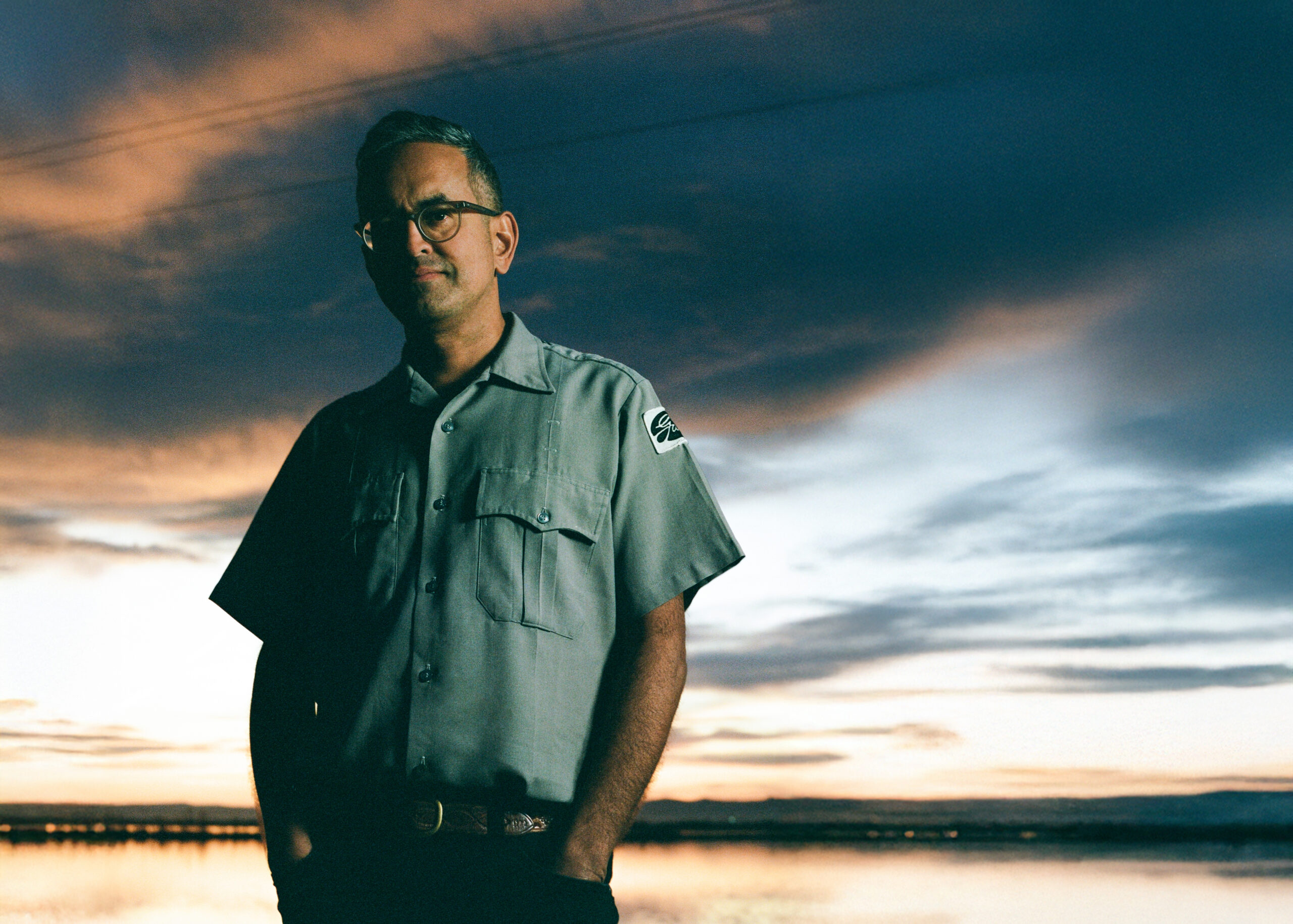
Having helped to shape the house music’s underground since the 90s, Asad Rizvi also known as producer and DJ Silverlining, is going through another growth period with the arrival of his new label Forgotten Chorus. Moving in a more techno-orientated direction on this label, Asad still maintains his impeccable production standards while exploring new realms. With his work being championed by all to hear, we sat down to discuss his work past, present and future.
Undoubtedly known for his work in the house realm, his early Silverlining work on the likes of seminal labels such as Wiggle and Wrong immediately cemented his name into the history books. These stonewall classic tracks would be unearthed for a new generation of diggers through his Silverlining Dubs series, but it was interesting to learn from Asad what his connection to techno would be during his formative years. He reflects, “I think the only way to describe this is some kind of clumsy, nerdy slip down some stairs into the underworld of techno. In around 1993, I’d started tinkering with a Yamaha SY77 synth that was lying around my school’s music department and I managed to put together a couple of tunes using its onboard sequencer and effects. Even though I was already having a pop at mixing jungle and hardcore breaks on belt drives, I really had no connection to the electronic underground in London as I was just too young. I think there was just something in the London water that drew me towards making my own oddball, adolescent version of ambient techno.”
Everybody needs to start somewhere, even for a leading light in the scene such as Silverlining, who adds, “So, some friends said that I ought to check out Colin Dale’s Kiss show, as he was playing records that didn’t sound too far off my little endeavours but were obviously more advanced. This opened a Pandora’s Box of music on Warp, Rising High, R&S and similar labels and hugely raised the bar for me. I would listen to his and also Colin Faver’s shows religiously, started buying the tunes and turning up to their techno nights armed with a homemade fake ID to get in, and skiving off lessons to make more of my own. A local pirate radio soon asked me to host a Sunday morning ambient show with the small bag of records that I owned. My first go on 1210s was live on air. I mixed textures rather than drums but it forced me to buckle up and learn to beat-match.”
“By late 1994, I had finished off about 11 quirky, slightly gooey compositions. I recorded them to cassette and gave it to Colin Dale at Club UK, not expecting him to listen. The following week, I was stunned to hear him giving me a shout on the radio asking me to come in! Another week later, I was sat in the Kiss FM studio, with my hero interviewing me and playing my early efforts on this hallowed piece of airspace. I later met Murf, who played a dubplate I cut, an ode to UR of sorts, at Club UK, which was kind of like the Fabric of those days. I’ve not heard these tunes for about 25 years, as the only copy is on a broken DAT tape, but I may get it repaired at some point for a chuckle.”
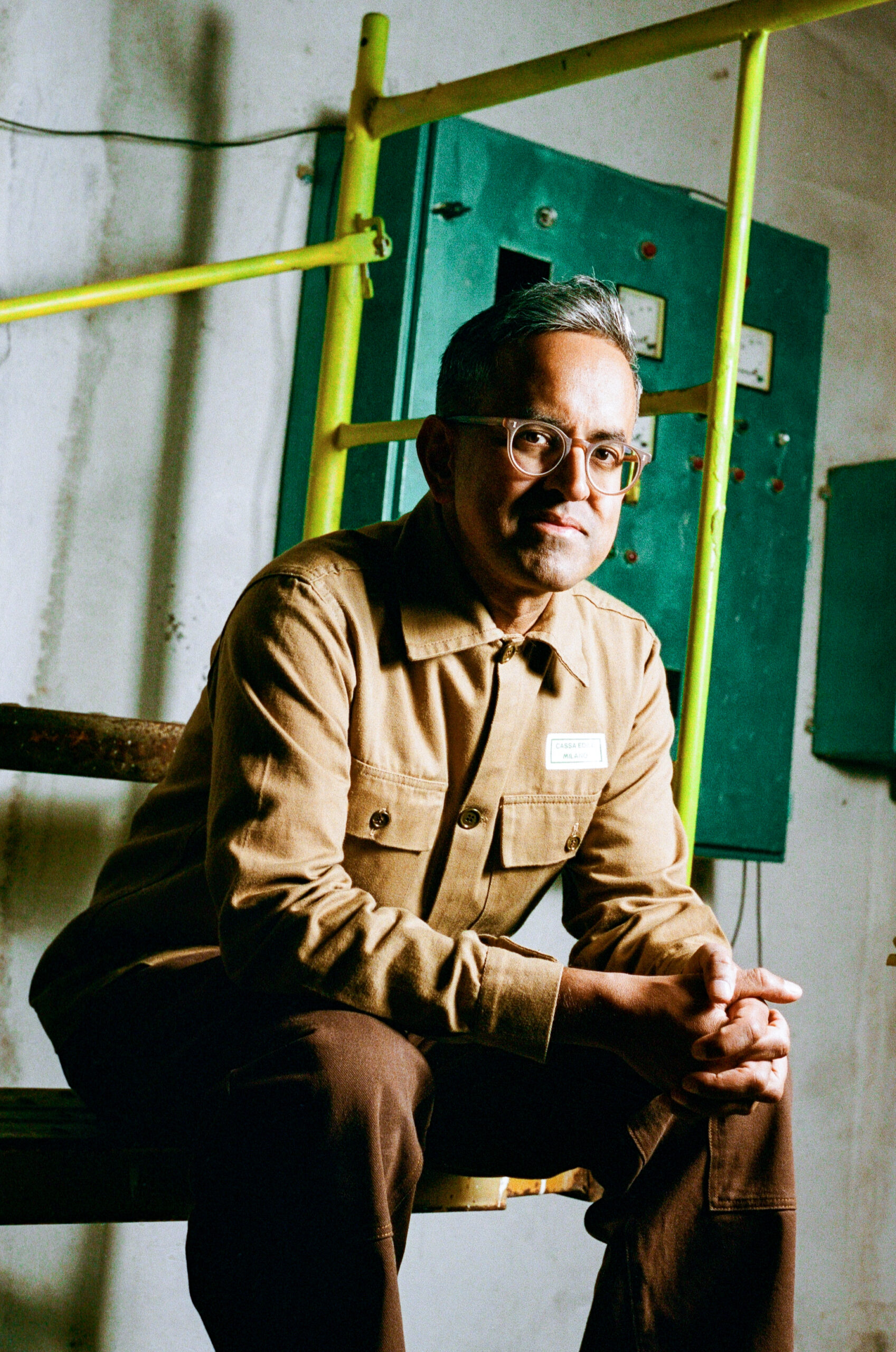
With the 90s being such an important period in electronic music for a myriad of reasons, who better to pass comment than Asad. Having lived through the early stages of dance music splitting into what we now know as house and techno, back then, things were not nearly as cut and dry.
Asad explains this blurring of genres and if it had any bearing at that time, “I feel there are a lot of misunderstandings about all this. The lines between house and techno have been very much blurred from their beginnings. When techno became a thing in Detroit, artists like Jeff Mills, Kevin Saunderson, Carl Craig, Derrick May, UR all made house records with a techno edge or techno records with vocals. And in Chicago, Armando, Adonis, Bam Bam, Ron Hardy, Ron Trent, Mike Dunn and so many more made darker takes on house with straighter grooves. And thanks to the TB-303, house has always been ‘techy’. Going back further into the early 80s, there were proto-records that sit somewhere between house and techno. So I think the fusion is as old as electronic dance itself.”
Asad continues to explain, “I was too late for that era, though, and I came into it at a time when the two camps had become quite entrenched in their ways and kept each other at arm’s length. By 1994, London techno heads largely retched at the growing commercialism of the house scene, while house heads feared the brooding seriousness of techno. There was some basis to those attitudes, but these were gross characterisations that overlooked more niche circles. But I felt, over the next year, things in London started to change, as you could feel that there was a buzzing, overarching drive to mix things up and bring some warmth and funk into the mix. It was a wonderful time. The garage, jazz, drum and bass, and eclectic scenes were also thriving and doing new things.”
It is fair to say that outside of America, London has been pivotal in the expansion of both genres, but Asad is keen to make a few notable points on these sometimes opposing movements, “There’s a perception that the fusion of house and techno started in London, but all our scene did was to pick up the baton, do it a bit differently, and refresh the slate from the purism that betrayed the original essence. Of course, it wasn’t the only city at it, but somehow a really special community of DJs, artists and dancers came together and created a momentum that we never expected. It was the first scene where I felt that I could truly belong. I was young but I knew I was a part of a new and exciting iteration of an all-embracing form of electronic dance. My only misgiving is the nomenclature that ensued in the 90s press. House and techno were not our inventions, which is why I’ve never believed it correct for us to claim inventorship of any hybrid.”
Silverlining’s back catalogue is extensive and over the years house DJs have undoubtedly gravitated towards his work. It was interesting to learn more from Asad about his work venturing down a more house-focused route, “I’m not sure I fully did, as there has been a lot of stuff with more broken rhythms, D’n’B, trancey techno, shoe-gazey ambient, and even indie dance. But I’d agree that the tunes I made with a house groove exceed these in volume.”
“Why this was is hard to pin down, but maybe because I have always loved the addictiveness of the house groove. Beneath the 4/4, the rhythms can be complex yet flow in a human way. At the same time, it offers a sonic palette that is able to morph into a multitude of modes that trigger the full spectrum of emotions. When done right, it’s a powerful force that can foster collectivity and heal.”

Being involved in London’s club scene at such a special time in its history we were keen to learn what clubs and parties shaped Silverlining as an artist, “In those early days, I was a big fan of techno nights like Lost, Final Frontier, Vapourspace, Deep Space, Megatripolis, various warehouse parties. I was impressed by the power of techno and the way bass translated onto systems and resonated through a warehouse or club.”
“But I also hopped around scenes, checking out other vibes across the spectrum. One that really stuck was Gilles Peterson’s That’s How It Is on Monday nights at Bar Rhumba. It was inspirational to see how such a diverse palette of music—that included dub, funk, hip hop, samba and jungle—can be so powerful and hypnotic on a rig. It definitely influenced how I shape my sets.”
It is clear that a lot, if not all of Asad’s music comes from the heart and is based on a feeling rather than trying to produce a certain type of record. We were interested to learn where he stood on the genre partitioning, “Thanks a lot; I do my best to stay true to myself. I’ve always felt that the idea of genre is restrictive, especially where it’s employed as a creative starting point and not the outcome. Genre dictates where things belong, rather than defining creativity on aesthetics alone. Making, say, a record that has similarities to others (for example, a 303 or deep bassline), is absolutely fine, but these creative decisions must be made because it feels right and not flow from a drive to make music fit in. In my view, music should always be made with an emotional, not taxonomic, outcome in mind.”
Moving on to his new label Forgotten Chorus and we love the story of just how poignant a distant sound can be and the ideas that such a simple moment can conjure up. Asad further explains the ethos of this new imprint, “I’m pleased to hear it resonated. My first thought was less of a memory than a reminder that beauty can be found in unlikely nooks in the sonic field. We do everything we can to enjoy music with the highest fidelity, from the studio to the playback gear we use and even our position on the dance floor. We all love that sweet spot, but it doesn’t render the incidental background noise useless, often because we are too caught up in the visuality of the moment.”
“It reminded me of a book I read a long time ago called ‘The World is Sound’ that points out that everything around us is made of sound, i.e. vibrating matter. Yet we narrow our attention to material objects that can be clearly defined, while shutting out nature, the unfamiliar and even ourselves. The more we listen, the more attentive and empathic we become. It dissolves notions of the internal and external; the ‘them and us’. The realisation that a distant, random rumble could trigger the imagination was both a fun and enriching realisation for me.”
For the uninformed, Silverlining heard a distant sound while he was relaxing in his festival tent and this gave him the idea for what is now known as Forgotten Chorus. Asad explains his process from taking this distant sound into the studio and forming what is now a fully fledged EP and record label. “I kept what’s best described as a ‘mental sample’ of the low frequencies filtering through the trees and filled in the upper register. Three weeks later, I went into the studio and made ‘Salvaged Chimes in the Rubble of Sound’ almost exactly as I imagined it, with more detail. I’d already started ‘Folk Dust’, a higher BPM breaks outing for me with a few twists and turns, so I finished it in a way that complemented Salvaged Chimes. And lastly, I made ‘Attuned to Detune’ in a similarly short space of time, focusing on a stripped-down but subtly metamorphosing groove.”
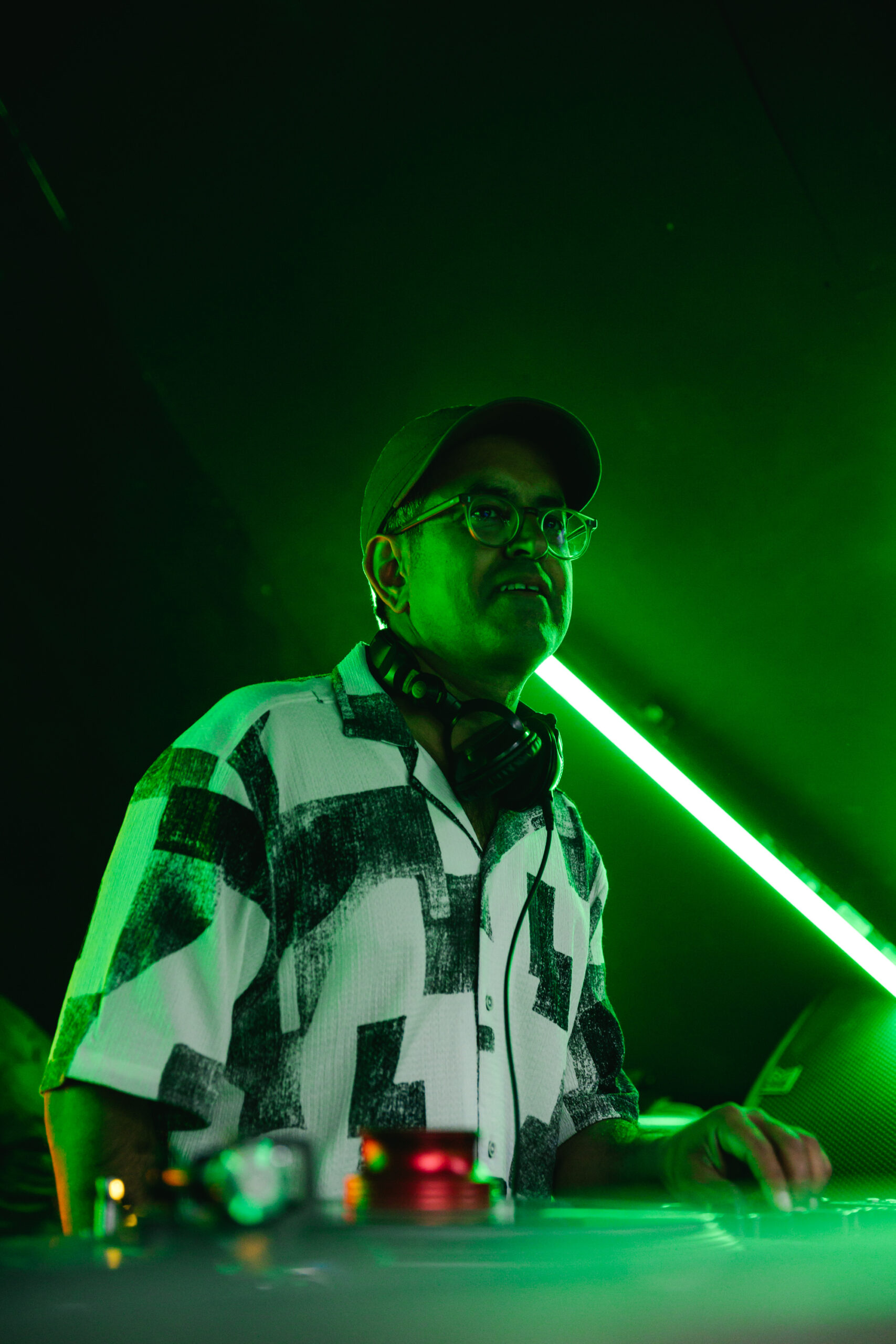
Wishing to drill down further into this new outlet for Silverlining’s creative output, we discussed what drives the new project, “It’s a consolidation of many things: it brings together my longstanding love for abstract electronic dance music with my own values as a person. It’s an invitation to listen. Both to the music in a way that triggers the individual imagination and to the disregarded, discarded sound of the world. And by sound, I don’t just mean ‘sounds’, but sound as the vibrational basis of reality and one of the fundamental structures of life.”
“To put that into more concrete terms, the genealogy of the scene we’re part of can be traced back to histories shaped by colonialism and slavery: from the emergence of jazz, its commodification through the invention of the phonograph; to a string of 20th-century music cultures that led to acid house and techno, also rooted in post-colonial struggles. We need to remind ourselves why this music was needed in the first place, the voiceless it gave voice to, and how pressing it presently is to deploy our music to fight dominant narratives and assumptions, given the horror show that is the world right now. The tracks, on their own, don’t convey any particular message; they’re just dance-floor tracks. One thing this is not is activism on wax.”
Asad continues to discuss, “But obviously all cultural production is created within some sort of context, and here, my tunes are shaped by my personal reality within time and space. As a South Asian who spent early years in a multitude of countries, ultimately growing up in London, the forces of colonialism are in my DNA and my experiences as a human, including in the music industry. The correct channel for this is social media, writing and fundraisers, but I felt I needed to carve out a space to drain the excess energy musically and convert it into something that hopefully sparks some joy in others, however fleeting.”
Moving on to the future of the label and with Asad’s recent “Real Techno” mix and recent fabric podcast being a point of reference, it became clear that this was not a new musical direction. “It just feels like an inevitable progression, having collected this sort of music since my early days and even made some over the years. I’d say old ones—like the Pearl Divers long side and the 99/100 Year Wait—are parked in the same neighbourhood. There are definitely common denominators with this EP to that mix and also a recent Fabric poddy, which reflect this side to my tastes and the faster, trippier side of my DJing, but I’m going to let it develop organically on the label. It’s one direction I’m excited to follow, but not the only one.”
More info on Silverlining
Trommel.154 | Instagram | Facebook | RA | Soundcloud | Bandcamp | Discogs